How to Protect Houseplants in a Heatwave
What to move, when to water and what to leave well alone when the forecast climbs, plus the houseplants that suffer first and the ones that shrug it off.
The short answer
- Get plants off hot glass. A south or west-facing sill in full sun is the most damaging place in the house during a heatwave.
- Water early in the morning, and water the compost rather than the leaves.
- Stop feeding until it passes. A stressed plant is not growing, and fertiliser in dry compost makes things worse.
- Thin-leaved plants suffer first: calatheas, marantas, ferns. Succulents, ZZ plants and snake plants mostly shrug it off.
- Do not mist, repot or prune your way out of it. None of those helps and two of them do harm.
How heat actually damages houseplants
Two different things go wrong in a heatwave, and they need opposite responses.
The first is a supply problem. A plant cools itself by letting water evaporate from its leaves, and in sustained heat it loses water faster than its roots can replace it, even when the compost is damp. It responds by closing the pores on its leaves to conserve what it has, which also stops it feeding itself. That is the drooping and the general sulk. It usually eases overnight once the temperature drops.
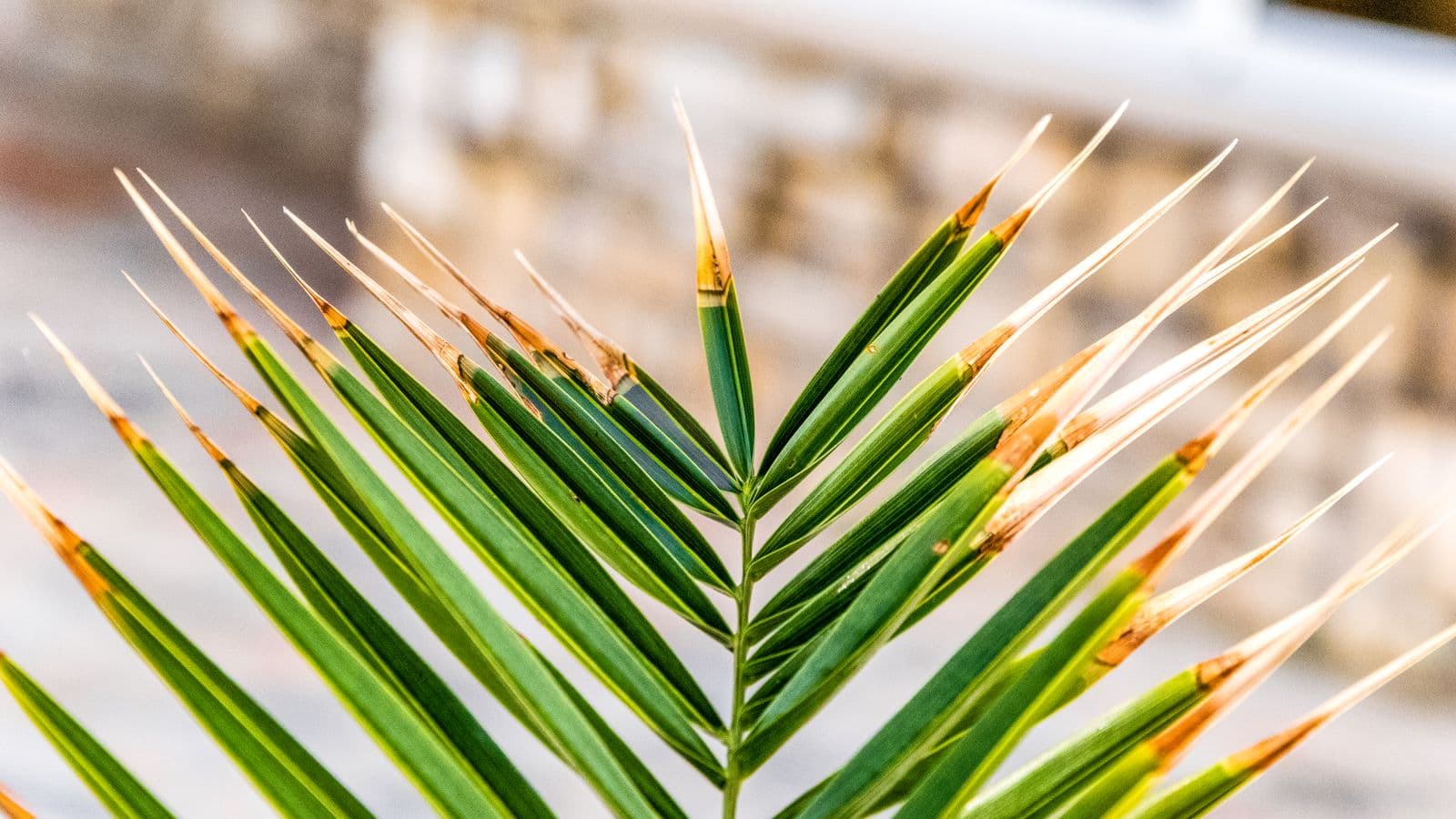
The second is a burn. Glass concentrates sunlight and traps heat, so a leaf pressed against a sunny window sits far hotter than the air in the room. That damage is permanent. The tissue dies in patches: bleached pale areas in the middle of a leaf, crisp brown edges where the leaf is thinnest.
Telling the two apart is the whole game. A wilting plant in damp compost needs shade, not another drink. Watering it again is how a heat-stressed plant ends up with root rot a fortnight later. A scorched plant needed moving yesterday.
Which houseplants are most at risk
Move these first
- Calatheas and marantas
- Thin leaves, forest-floor plants, no tolerance for dry air and direct sun. The edges crisp first and the damage does not grow out.
- Ferns
- Built for damp shade. A hot, bright, dry day is the opposite of everything they are adapted to.
- Fittonia and other thin-leaved trailers
- Wilt dramatically and fast. Usually recover if you catch them, but they will do it again tomorrow if nothing changes.
- Anything recently repotted or propagated
- A root system that is still establishing cannot supply a hot day's demand, whatever the species.
Usually cope
- Snake plants
- Store water in their leaves and lose it slowly. Heat is rarely what kills them.
- ZZ plants
- Thick underground rhizomes hold a reserve. They will sit out a hot week without complaint.
- Succulents and cacti
- Genuinely built for this, as long as they are already used to the light they are sitting in.
- Aspidistra
- The cast iron plant earns the name.
Species matters less than two other things, though. Anything recently repotted is working with roots that cannot yet meet demand. And any plant that has spent months in a dim corner will burn quickly if you move it somewhere bright, even one whose species loves sun. Plants acclimatise to light slowly, over weeks.
What to do before the hottest day
Most of the work is done the evening before, not during the afternoon itself.
Move plants off sunny sills
A metre back into the room, or behind a sheer curtain, is usually enough. You are not trying to put them in the dark, just out of the direct beam and away from hot glass.
Close curtains or blinds on the sunny side
This keeps the room cooler for you as well. On the hottest days, closing windows during the afternoon and opening them overnight keeps more heat out than leaving them open all day.
Water early in the morning
The compost has the whole cool part of the day to take it up, and the plant starts the hot stretch with a full tank. Watering at midday mostly evaporates.
Group plants together
A cluster of plants transpiring in the same spot raises the humidity around itself far more effectively than misting does, and they shade each other's pots.
Move the most vulnerable somewhere cooler
A bathroom, a north-facing room or a hallway will be several degrees cooler and more humid than a sunlit living room. Ferns and calatheas will thank you for a few days away.
Watering in a heatwave: more, but how much?
More often, yes, but the interval is the wrong thing to focus on. A plant in a small terracotta pot in a warm room might genuinely need water daily in a heatwave. The same species in a large plastic pot in a cooler room might not need it any more often than usual, because plastic does not breathe and a bigger volume of compost holds water for longer.
So check rather than schedule. Push a finger a couple of centimetres into the compost. If it is damp down there, leave it alone whatever the forecast says. Lifting the pot works even better once you know what a watered one feels like, because the weight difference is obvious and it tells you about the whole pot rather than the top of it.
Two things to avoid. Do not leave pots standing in saucers of water in the heat, which suffocates roots and breeds fungus gnats just when the plant is least able to cope. And do not water a wilting plant reflexively. Check the compost first, because in a heatwave a droop very often means the leaves are losing water faster than the roots can move it, not that the pot is dry. Our guide to how often to water houseplants covers that pot check in full, and the drooping peace lily guide shows how to tell thirst from wet roots.
Let something else watch the forecast
This is the job Folly was built to do. Give a growing site its location and Folly watches the local forecast against it, then tells you before the heat arrives which of your particular plants are at risk and what to do for each one. Not a generic weather warning you have to translate yourself, but a protection checklist naming the plants that need moving.
It works the same way for frost, wind and storms, and Folly Pro lets you run several growing sites, each with its own location and its own weather. A flat and an allotment, or a garden and a greenhouse, stop being one compromise schedule and become two sets of alerts that actually reflect where those plants are standing.
The schedules underneath are built the same way. Every watering interval is calculated from more than fifteen attributes covering your room, light, pot, season and local weather, and Folly shows you all of them. Tap any plant and you see each factor with the percentage it added or removed, so when an interval stretches from six days to fourteen you can see exactly why. Most apps ask you to trust the number.
Folly is free to download and free to keep using, with a monthly allowance of free identifications, chore day grouping, notes with progress photos and the full care guide included at no cost. We also publish our prices and say plainly when another app suits you better, which you can see in our honest comparisons with the other main plant apps.
What not to do
Do not mist. It is the most commonly repeated and least useful heatwave advice going. The water is gone in minutes, it does not cool the plant meaningfully, and damp foliage in still warm air invites fungal problems.
Do not feed. Fertiliser tells a plant to grow, and a heat-stressed plant has already stopped. Feeding into compost that keeps drying out concentrates salts around the roots, which burns them. Resume when the weather breaks and you see new growth.
Do not repot. Repotting always costs some root damage, and a plant already struggling to move water has no capacity to absorb that. Wait.
Do not prune the damage off immediately. A leaf with a crisp brown edge is still a working leaf, and a plant that has just lost a lot of capacity needs every one it has.
After the heatwave: what recovers and what does not
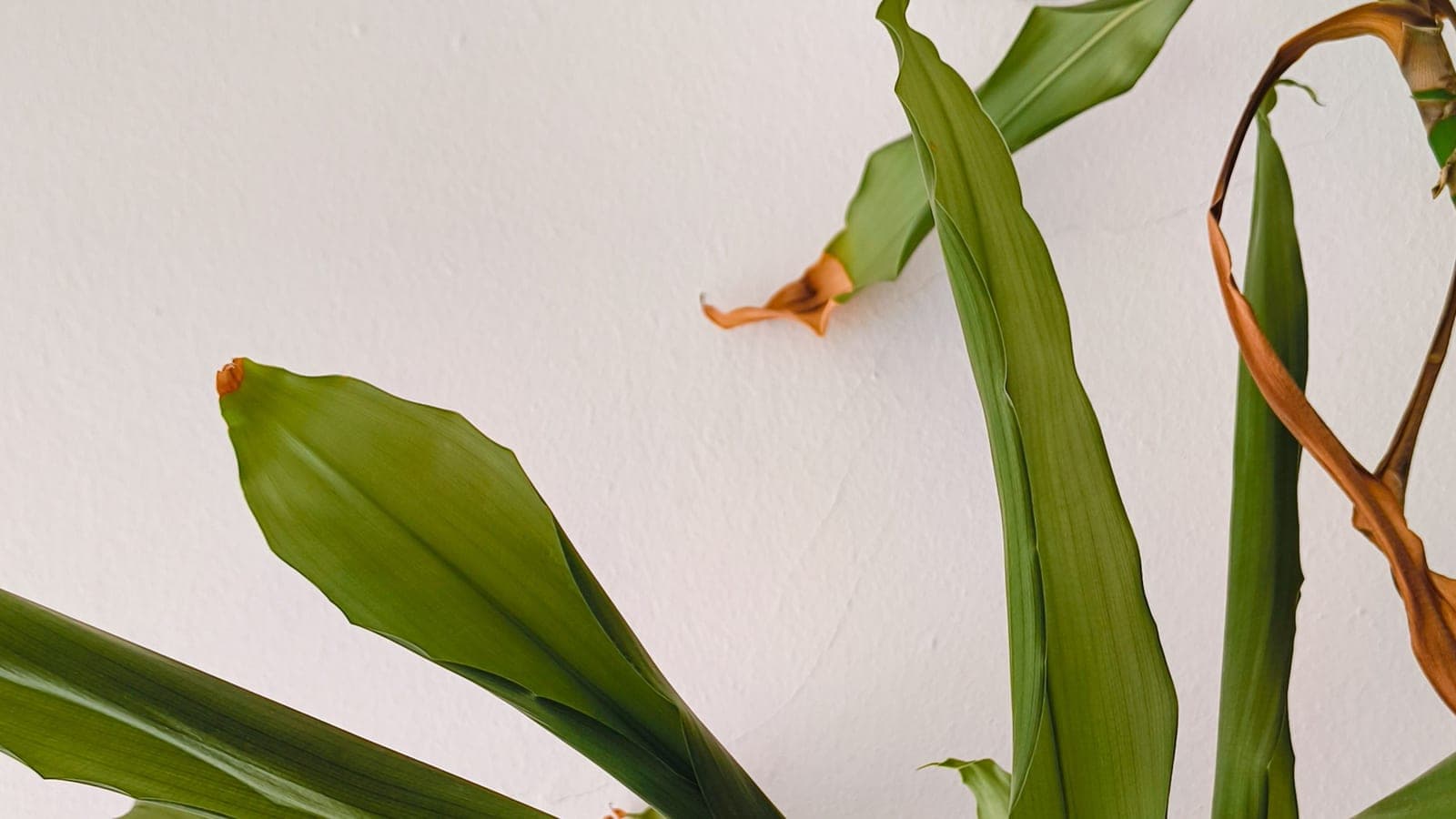
Give it a few days before judging anything. Drooping usually resolves within a day of the temperature dropping. Scorch does not resolve at all, but that does not mean the leaf is useless, and stripping a plant of damaged foliage right after a stressful week takes away the very thing it needs to rebuild. Remove leaves only once they are more brown than green, or fully dead.
Hold off on feeding until you see new growth. That is the plant telling you it has capacity again, and it is a far better signal than the calendar. When it comes, resume normal feeding and put things back where they live, moving them gradually if they have been in a dim room for a week, because acclimatising works in both directions.
If a plant does come out of it looking rough, Plant Doctor covers more than 500 diseases and pests with a step-by-step treatment plan, a recovery timeline and prevention notes, so heat damage that turns into something else does not have to be guesswork.
Questions people ask
Should I move plants away from windows in a heatwave?
Move anything sitting on a south or west-facing sill in direct sun. Glass concentrates sunlight and traps heat, so a leaf touching a sunny window can be considerably hotter than the room around it. A metre back into the room, or behind a sheer curtain, is usually enough. North-facing windows are generally fine and can stay as they are.
Should I mist plants during a heatwave?
Misting is the least useful thing you can do. The water evaporates within minutes, so any humidity gain is over almost immediately, and it does nothing to cool the plant or refill its roots. On plants that are already stressed, leaving foliage damp in still, warm air invites fungal problems. Grouping plants together and moving them out of direct sun does far more.
Why are my plant's leaves crispy after a hot day?
Crisp brown edges or bleached patches are scorch, meaning tissue that has died from heat and light, usually where the leaf sat closest to glass. It is permanent. The leaf will not repair itself, though it can keep working, so leave it in place unless it is more brown than green. Move the plant out of direct sun before the next hot day.
Do succulents need protecting in a heatwave?
Less than most, but not none. Succulents and cacti store water and handle heat well, so they rarely wilt. What catches them out is sudden exposure. A plant that has spent months in a shady corner will scorch in a sunny window regardless of how drought-tolerant its species is, because plants acclimatise to light levels slowly. Move them gradually.
How hot is too hot for houseplants?
Most common houseplants come from tropical and subtropical regions and are comfortable at normal indoor room temperatures. Trouble tends to start when a room stays hot for days rather than hours, and when heat arrives alongside direct sun and dry air. Rather than watching a thermometer, watch the plants. Wilting in damp compost and crisping leaf edges are the signals that matter.