How Often Should You Water Houseplants?
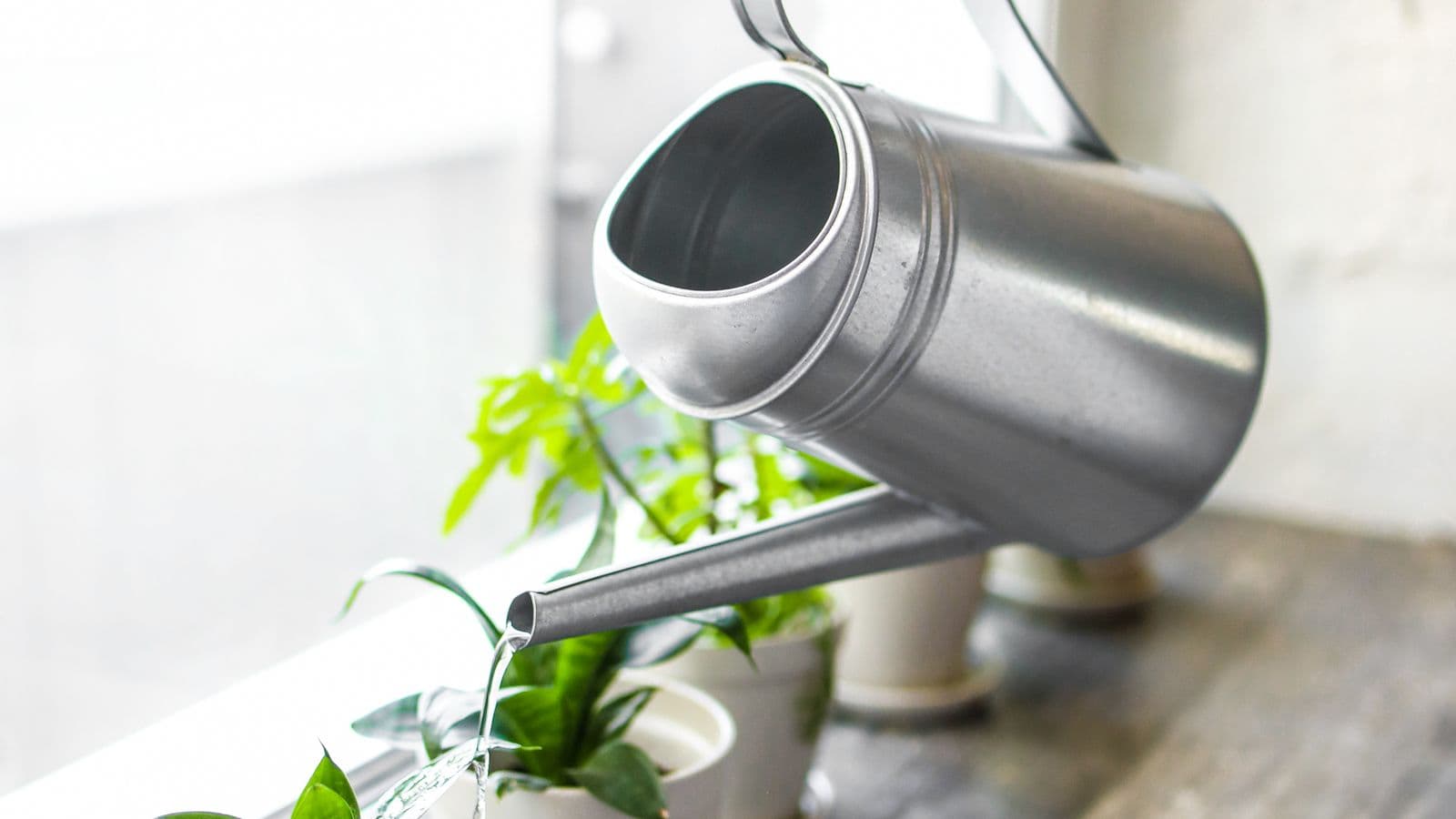
Once a week is the answer that kills plants. What actually sets a watering interval, how to read a pot in ten seconds, and how to water properly.
The short answer
- There is no correct number of days. Any app or label that gives you one without asking about your pot, your room and your season is guessing.
- Check the compost, not the calendar. For most leafy houseplants, water when the top two to three centimetres are dry.
- Water thoroughly until it runs out of the bottom, then drain it. Little and often keeps the lower roots permanently dry.
- Pot size and material change the interval more than the species does.
- Winter roughly halves demand. Summer sun, heating and a small pot all shorten it.
Why "once a week" kills plants
It is the most repeated piece of houseplant advice and it is close to useless, because the interval is set by conditions rather than by species. The same pothos might need water every four days in a small terracotta pot on a south-facing sill in July, and every three weeks in a large plastic pot in a north-facing hallway in January. Both are the same plant with the same label on the side of the pot.
A fixed weekly routine gets the first plant through a drought every week and drowns the second one slowly. It also fails the moment anything changes: a heatwave, the heating going on, a move to a brighter room, a repot into a bigger pot.
What follows is how to work out your own interval, and how to keep it right as conditions move underneath it.
What actually sets the interval
Watering frequency is really a question about how fast a pot dries out. These are the factors that decide it, roughly in order of how much they matter.
| Factor | Effect on how often you water |
|---|---|
| Light | The single biggest driver. A plant in bright light uses several times the water of the same plant in a dim corner. |
| Pot size relative to the plant | A large pot holds far more water than small roots can use, and stays wet for weeks. A pot-bound plant dries within days. |
| Pot material | Terracotta breathes and dries fast. Glazed ceramic and plastic hold water much longer. |
| Season | Short days mean slow growth and low demand. Most plants need roughly half as much water in midwinter as at midsummer. |
| Room temperature and air movement | Warmth and draughts both speed evaporation. A radiator below a shelf is doing more than you think. |
| Species and leaf type | Thin leaves lose water fast and store none. Succulents, snake plants and ZZ plants store plenty. |
| Compost type | Free-draining mixes with bark or perlite dry quickly. Dense peat-based compost holds on. |
Notice how much of that has nothing to do with which plant it is. Two identical plants in different corners of one room are living different lives, which is why the person who waters everything on a Sunday ends up with some plants crisping and others rotting.
How to read a pot in ten seconds
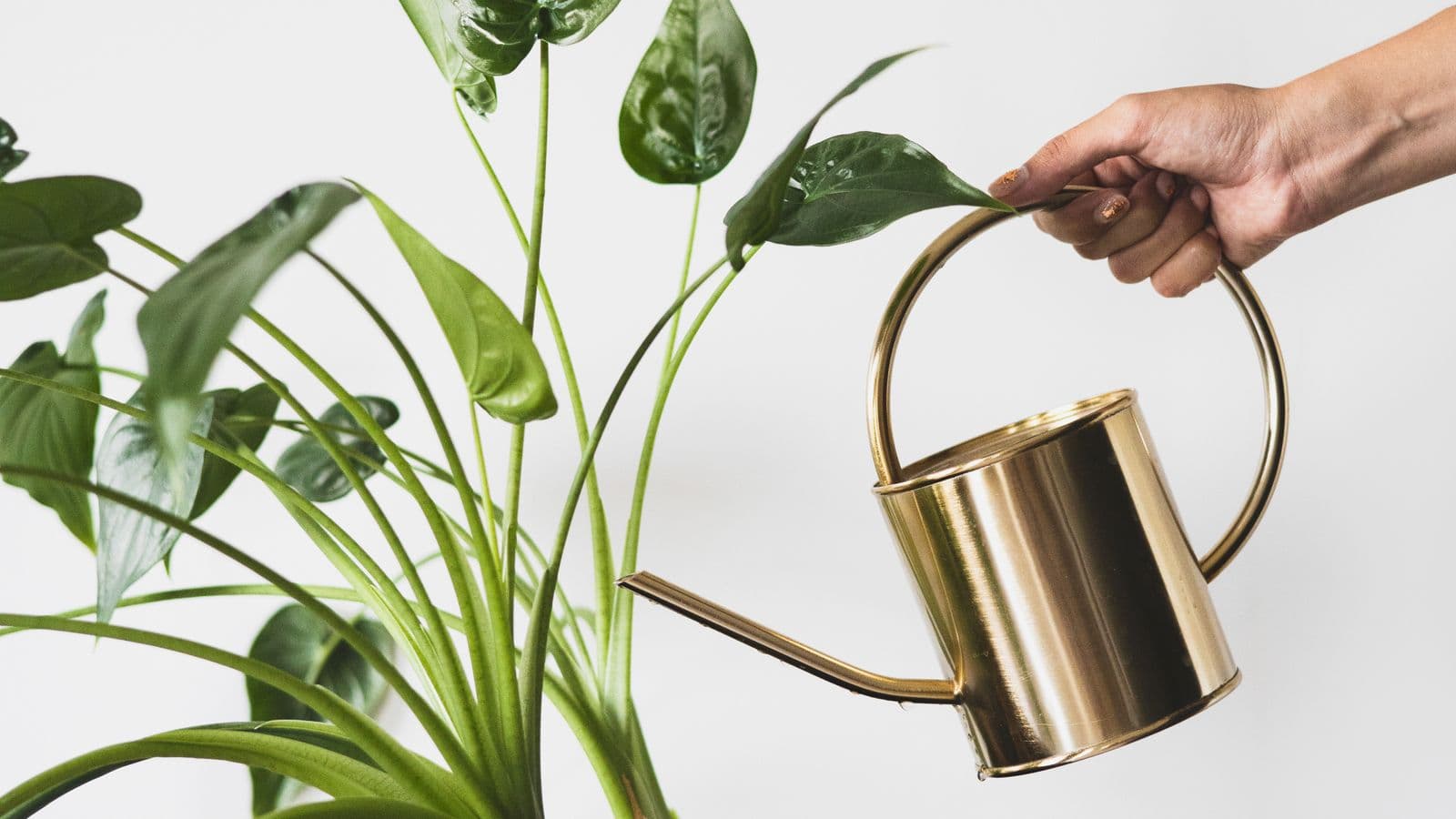
Push a finger into the compost
Go in two or three centimetres, not a dab at the surface. The top always dries first and tells you very little. For most leafy houseplants, dry at that depth means water.
Lift the pot
Learn what your own pots weigh just after watering and again a week later. Weight is the most reliable signal you have, and it works on plants where poking around the roots is awkward.
Look for the gap at the edge
Compost pulling away from the sides of the pot has dried out hard. Water poured on top will run straight down that gap and out of the bottom without wetting the roots.
Adjust for the species
Succulents, cacti, snake plants and ZZ plants want the compost dry most of the way down. Ferns, calatheas and peace lilies want it evenly damp but never wet.
When genuinely unsure, wait two days
Almost nothing is lost by watering a leafy houseplant slightly late. A good deal can be lost by watering it early, every time, for a year.
Water properly when you do water
Frequency is half of it. How you water matters just as much, and the common mistake is a small amount often, which wets the top of the compost while the roots underneath stay permanently dry.
Water until it runs freely from the drainage holes. That wets the whole root ball and flushes accumulated fertiliser and mineral salts out with it, which is what stops the leaf tips browning over the following months. Then let the pot drain completely and tip away whatever collects in the saucer or the cover pot. A plant standing in its own run-off is a plant with no air around its roots.
For a pot that has dried out hard, stand it in a few centimetres of tepid water for twenty minutes instead. The compost draws water up and swells back against the sides of the pot, which top watering cannot achieve once the gap has opened.
Season changes the answer more than anything else
A watering habit built in July is wrong by November, and the change is not gradual enough to notice by feel.
Short days mean less light, less photosynthesis and less water drawn up through the plant. Growth slows or stops. Compost that dried in five days in midsummer can hold water for a fortnight in midwinter, and the routine that kept everything thriving through summer becomes the thing most likely to kill a plant by spring. Wet winter compost is also where fungus gnats breed, which is why an infestation so often starts in December.
Heat runs the other way. A heatwave can double water use in a few days, and a plant on a sunny sill may need checking daily rather than weekly. Our heatwave guide covers that in full, and the winter guide covers the other end.
The practical version: stop watering on a rhythm and start checking on a rhythm. Look at every pot once or twice a week, and water the ones that ask for it.
Reading the signs when you get it wrong
Both mistakes can produce a drooping plant, so the pot is the evidence rather than the leaves. A drooping peace lily is the clearest example there is, because it collapses identically whether the compost is bone dry or waterlogged.
Underwatered: compost light, dry and shrunken from the sides. Leaves wilt but stay firm and papery, and older leaves may crisp from the tip inwards. Recovery after a thorough soak is fast, usually within hours.
Overwatered: compost heavy and wet days after watering, sometimes with a sour smell. Lower leaves yellow, growth is soft and limp, and fungus gnats appear. Roots go brown and soft instead of firm and pale. Recovery is slow and needs fresh compost rather than more water.
If the leaves are telling you something and you cannot place it, our guides to yellowing leaves and brown leaf tips sort the patterns into causes.
Let something else do the arithmetic
Every factor in the table above is knowable. The difficulty is holding twenty plants worth of them in your head while the season moves under all of them at once.
That is what Folly's Smart Care schedules do. Each plant gets its own watering interval built from more than fifteen attributes, including the species, the pot size and material, the light in that room, the season and the live weather where your plants actually are. When autumn shortens the days, the intervals stretch on their own. When a hot spell arrives, they tighten.
The part we care most about is that it is not a black box. Tap any plant and you can see every factor behind its interval, with the percentage it added or removed. Most apps ask you to trust the number. Folly shows its working, so you can disagree with it.
Chore day grouping puts the resulting tasks on days that suit you rather than scattering them across the week, and it is free, with no trial attached.
Questions people ask
How often should I water my houseplants?
There is no single interval, which is why plants die on the once-a-week rule. The same plant can need water every four days in a small terracotta pot on a sunny sill and every three weeks in a large plastic pot in a shaded room. Check the compost instead of the calendar: for most leafy houseplants, water when the top two to three centimetres are dry.
Is it better to underwater or overwater?
Underwater, by a clear margin. A dry plant wilts and recovers within hours of a drink. A waterlogged one loses its roots to rot over weeks, often without any obvious warning until the damage is done. Overwatering kills far more houseplants than drought, and it is harder to reverse.
How do I know if I am overwatering?
Compost that is still wet several days after watering is the main sign. Yellowing lower leaves, a sour smell from the pot, soft limp growth and fungus gnats around the surface all point the same way. Confusingly the leaves may droop exactly as if the plant were thirsty, because rotting roots cannot take up water.
Should I water houseplants from the top or the bottom?
Top watering is fine for most plants and has the advantage of flushing salts out through the drainage holes. Bottom watering suits anything that has dried out hard, plants that resent wet leaves, and African violets. Whichever you use, let the pot drain completely afterwards and never leave it standing in the run-off.
Do houseplants need less water in winter?
Almost always, yes. Less light means less growth and less water used, so compost that dried in five days in July can stay wet for two weeks in December. Keeping a summer routine through winter is one of the most common ways houseplants are lost. Stretch the interval and check the pot before every watering.
Keep reading
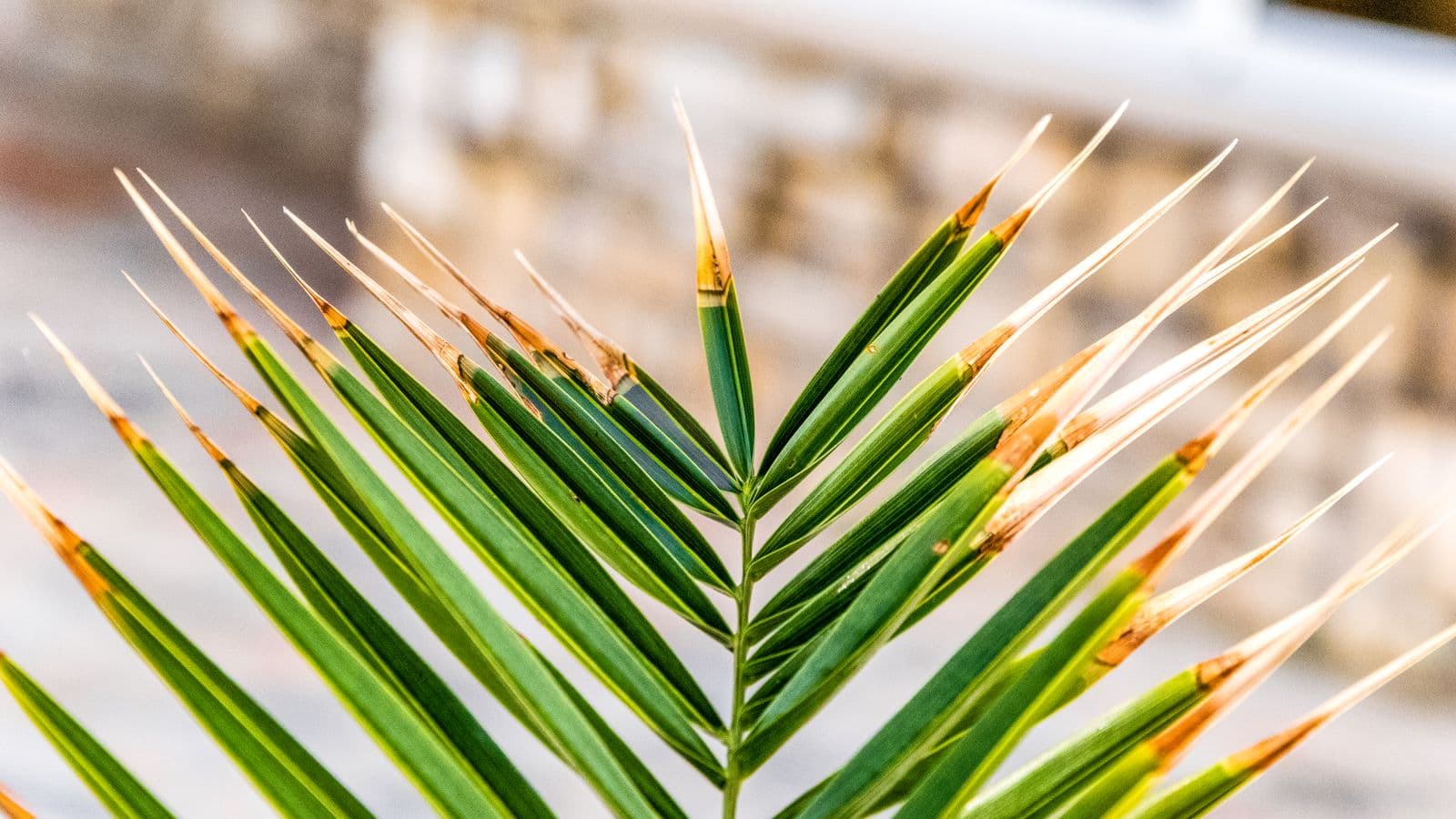
Why Are My Houseplant's Leaf Tips Turning Brown?
Brown tips are a symptom, not a diagnosis. How to tell dry air from salt build-up, thirst from failing roots, and what to change for each one.
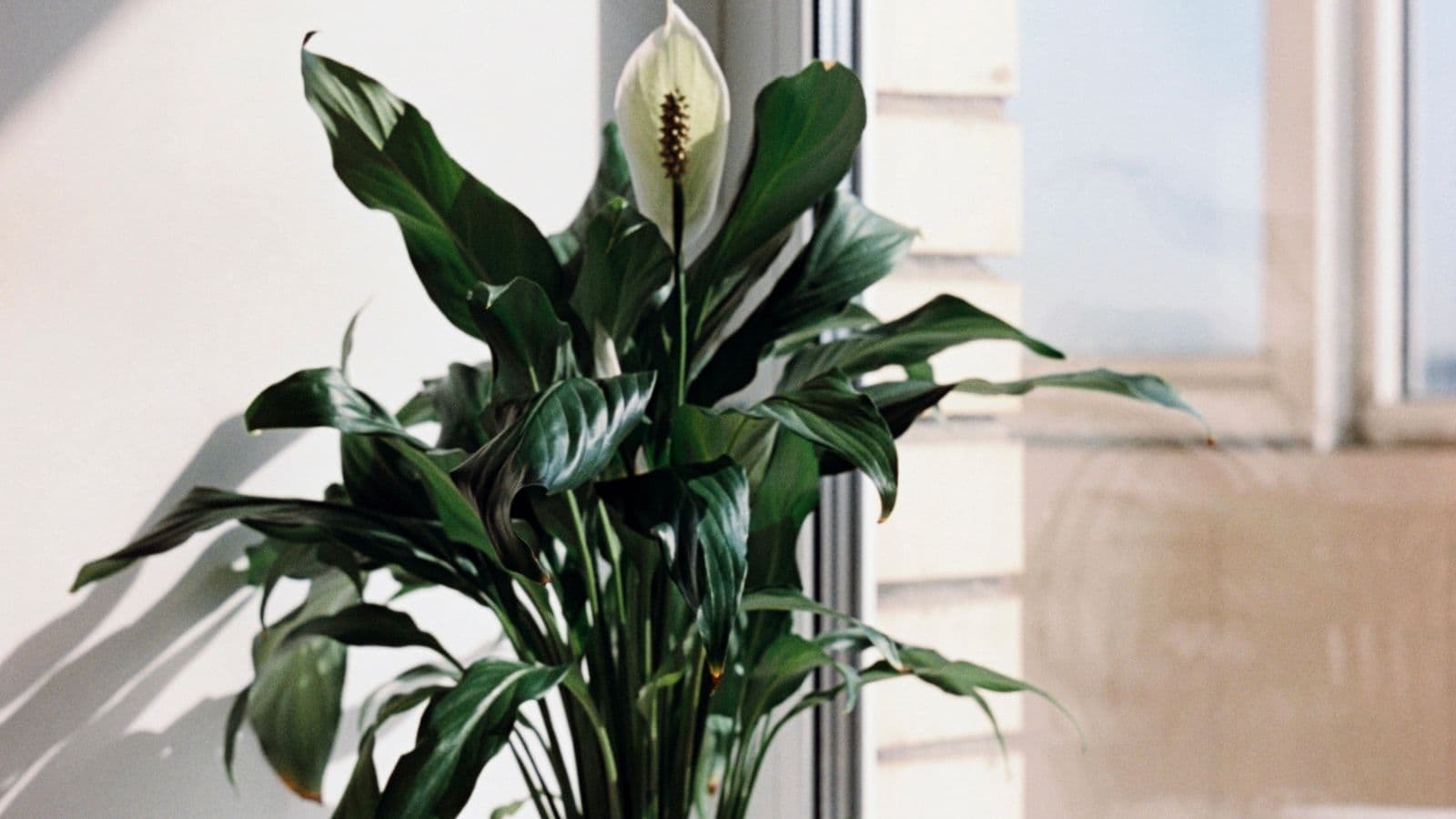
Why Is My Peace Lily Drooping, and How to Revive It
A drooping peace lily is usually thirsty and recovers in hours. Here is how to tell that apart from root rot, cold and shock, and what to do for each.
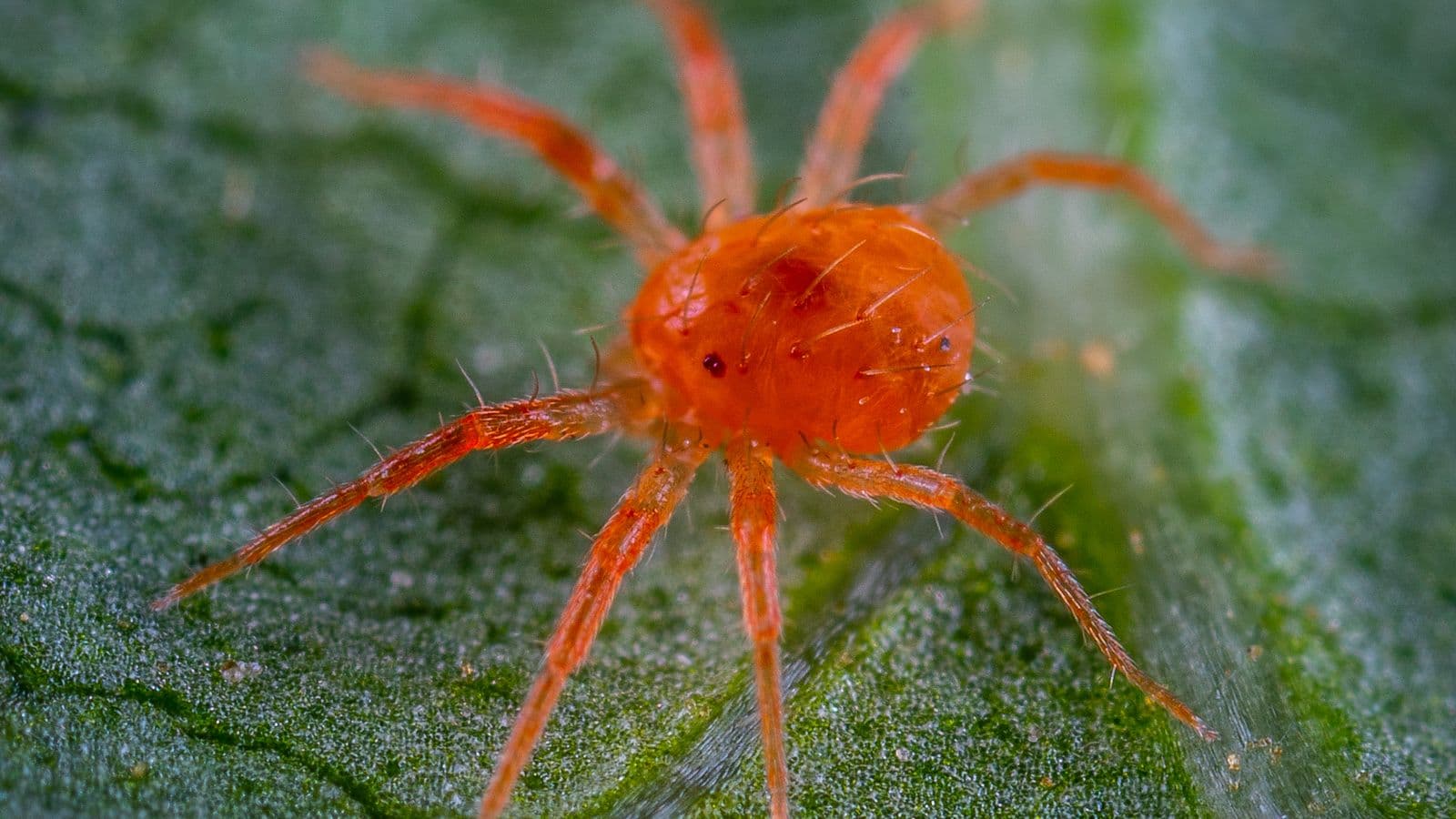
How to Get Rid of Spider Mites on Houseplants
Spider mites explode in heated rooms and hide under the leaves. A three week plan that breaks the egg cycle, plus how to spot them before the webbing.