Houseplant Care in a UK Winter, With the Heating On
Short days, dry radiator air and cold windowsills are three different problems. What to change, what to stop, and how to tell which is hurting your plants.
The short answer
- Ease off watering when the heating goes on, not when the calendar changes. Overwatering kills more houseplants over a British winter than cold does.
- Get plants off radiator shelves. Hot dry air rising over the leaves is the single most damaging thing in a heated room.
- Stop feeding until you see new growth in spring.
- Move thin-leaved plants off cold windowsills at night, especially behind closed curtains.
- Expect very little growth from November to February. That is normal, not a problem to fix.
Why UK winters are hard on houseplants
Three things happen at once, and because they arrive together it is easy to blame the wrong one.
The days get very short. Midwinter in the south of England gives under eight hours of daylight, and less in Scotland, most of it flat and grey. A plant a couple of metres from a window in December is getting a fraction of what it had in June.
The heating comes on, and indoor air gets dry. Warming cold outside air without adding moisture to it drops the relative humidity in a room considerably, which is the opposite of the humid conditions most common houseplants evolved in. It is also the most common reason for brown, crisp leaf tips in winter.
And windowsills get cold. The brightest spot in the house in winter is also the coldest, and at night, behind a closed curtain, it can be dramatically colder than the room you are sitting in.
So the plant is asked to do less photosynthesis, lose more water, and cope with a bigger temperature swing, all at once. Most of good winter care is just not making that worse.
The radiator problem
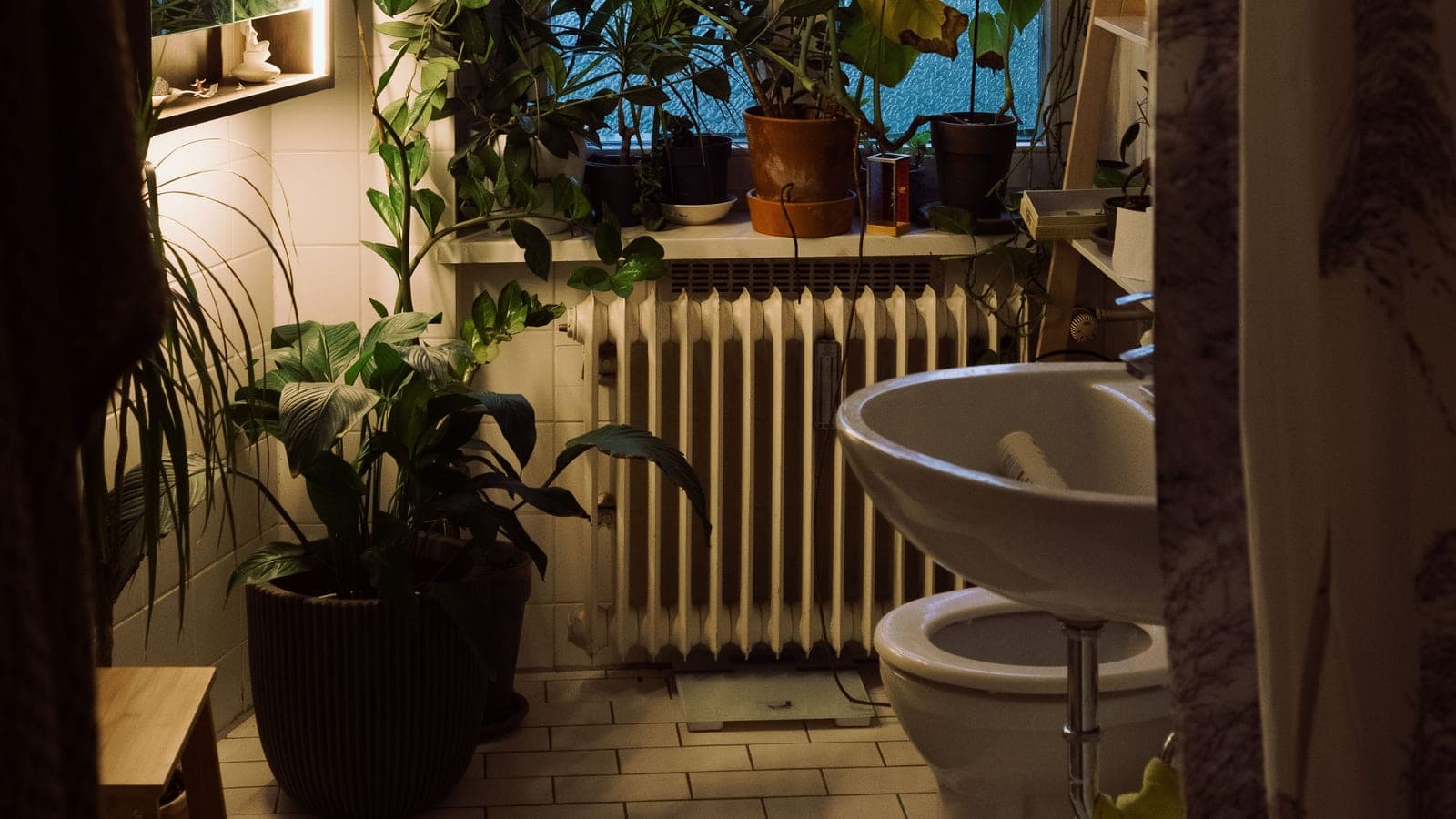
A radiator shelf looks like a sensible place for a plant and is close to the worst one. Hot dry air rises straight over the leaves, so the plant loses water far faster than the season's low light can justify replacing, and the compost dries unevenly. Bone dry at the top, sodden underneath. That hot, dry air is also exactly what spider mites thrive in, which is why an infestation so often starts on the radiator shelf.
Our guide to plants near radiators covers which plants cope with the heat and how to test a spot.
Move anything thin-leaved off radiator shelves
Calatheas, marantas, ferns and fittonias first. If a radiator shelf is the only space you have, put a snake plant or a ZZ plant there instead and move the fussy ones elsewhere.
Check what is directly above and behind
A plant on a sill can still be sitting in the plume from a radiator underneath it. Hold a hand where the leaves are on a cold evening. If it feels like a warm draught, so does the plant.
Be honest about humidity
Grouping plants together helps a little and pebble trays help less than people claim. A humidifier is the only thing that reliably moves the number, and it is only worth it if you have plants that genuinely need it.
Dust the leaves
In low light a plant needs every photon it can get, and a film of dust is a real loss. A damp cloth once over the winter costs nothing.
Do not move plants closer to a radiator for warmth
Cold rooms are rarely the problem in a British house. Dry air is. Warmth from a radiator arrives with the drying attached.
Light: what short UK days actually mean
The main effect of a British winter is that plants stop growing, and the right response is to stop treating them as though they are. A plant that is not growing does not need feeding, does not need repotting and does not need as much water.
Moving plants closer to windows genuinely helps and is the cheapest thing you can do. A metre closer to the glass is a large proportional gain in December, even though the same move in July would risk scorching them. South-facing windows that were too harsh in summer are often exactly right in winter.
Grow lights are worth it if a room is genuinely dark, if you are keeping herbs or seedlings going, or if you want something to keep growing rather than merely hold on. For most foliage houseplants in an averagely lit British room they are optional. Not growing much for three months is what these plants do.
Watering: why it drops, and how to judge it
This is where most winter losses happen, and the mistake is nearly always a schedule kept going out of habit.
A plant in December might use half the water it used in July, or less. If you keep watering fortnightly because that is what you have always done, the compost never dries, the roots sit wet in a cold pot, and the plant rots from underneath while looking, for a while, merely a bit sad.
Check instead. Push a finger a few centimetres into the compost and only water if it is dry down there. Better still, learn what the pot weighs when it has just been watered and when it is dry, because lifting it tells you about the whole pot rather than the surface. Expect the gap between waterings to stretch out considerably, and expect it to be different for every plant in the house. Our guide to how often to water houseplants goes through the checks in more detail.
When you do water, water properly, until it runs from the drainage holes, then tip away whatever collects in the saucer. Little sips leave the bottom of the pot permanently dry and the top permanently damp.
Care that changes when the season does
Winter care is really just a set of adjustments that all have to happen at slightly different times for every plant in the house, which is exactly the sort of bookkeeping people give up on by January.
Folly does it for you. Every schedule is calculated from more than fifteen attributes covering the room a plant lives in, its light, its pot, the season and your local weather, and it shifts as those change. A watering gap that stretches from six days to fourteen across the autumn happens on its own, and you can see why it happened: tap the plant and every factor is listed with the percentage it added or removed. Nothing about winter needs recalculating by hand.
The rest is built the same way. Chore day grouping puts care on days that actually suit you rather than scattering it across the week, and it is free with no trial attached. Weather alerts name the plants at risk before a cold snap does damage, per growing site, so a greenhouse and a windowsill are not treated as the same place. Folly Pro adds a personalised monthly care guide written around your collection and your climate, which in a British winter mostly tells you to do less, and says why.
If you want to see how that stacks up against the alternatives, we publish honest comparisons with the other main plant apps, concessions included, and there is a fuller round-up of plant care apps on this blog.
Which plants shrug off a UK winter, and which sulk
Will need attention
- Calatheas and marantas
- Dry radiator air crisps their edges faster than anything else in the house. The first plants to move.
- Ferns
- Want humidity that a heated British house does not have. A bathroom is often the honest answer.
- Figs, including fiddle-leaf
- Drop leaves in protest at draughts, moves and the heating coming on. Pick a spot in autumn and leave them in it.
- Alocasia
- Often dies back to nothing and looks dead. Keep it barely moist and leave it alone rather than watering it harder.
Barely notice
- Snake plants
- Cope with low light and dry air, and want very little water in winter anyway.
- ZZ plants
- Close to unkillable over a British winter. Water rarely and forget about them.
- Pothos and heartleaf philodendron
- Slow right down but keep going in light most plants would complain about.
- Cacti and most succulents
- Actively want a cool, dry, bright rest. Keeping them warm and watered is the mistake here.
When to go back to normal in spring
Follow the plant, not the date. New growth is the signal, whether that is a new leaf unfurling or a visible extension of a stem, and in most British homes it comes somewhere in March or April, earlier in a bright room.
When it does, resume feeding, let the watering interval shorten again, and do any repotting that needs doing. Repotting at the start of a growing season gives the plant the whole year to establish. Repotting in November gives it damaged roots and no light to recover with.
Questions people ask
Should I water houseplants less in winter in the UK?
Almost always, yes, but less often rather than less each time. Short days and cooler rooms slow growth right down, so a plant uses far less water and the compost stays wet much longer. Overwatering is the most common way a houseplant dies over a British winter. Check the compost instead of keeping to a schedule, and when you do water, water properly.
Can houseplants sit above a radiator?
It is the worst spot in the room. Hot dry air rises straight over the foliage, so the plant loses water constantly while its roots are cold and slow, and the compost dries unevenly. If a radiator shelf is the only place you have, put the most tolerant plants there, such as snake plants or ZZ plants, and move anything thin-leaved somewhere else.
Do houseplants need grow lights in a UK winter?
Most common foliage houseplants do not need them to survive. They will simply grow very little between November and February, which is normal. Grow lights are worth it if you are trying to keep something actively growing, if you are raising herbs or seedlings, or if a room is genuinely dark rather than just dim.
Why is my houseplant dropping leaves in winter?
Usually a sudden change rather than winter itself. Figs in particular drop leaves when moved, when a draught starts, or when the heating comes on for the season. Some loss of older lower leaves is normal as a plant sheds what it can no longer support in low light. Rapid loss of new growth, or yellowing from the base up, more often points to wet compost.
When should I start winter care?
When the heating goes on, not when the calendar says winter. That is the moment indoor conditions actually change, because the air dries out and the radiators start running, and it usually happens well before the coldest weather. Easing off watering and stopping feeding from that point is more useful than picking a date.