How to Get Rid of Spider Mites on Houseplants
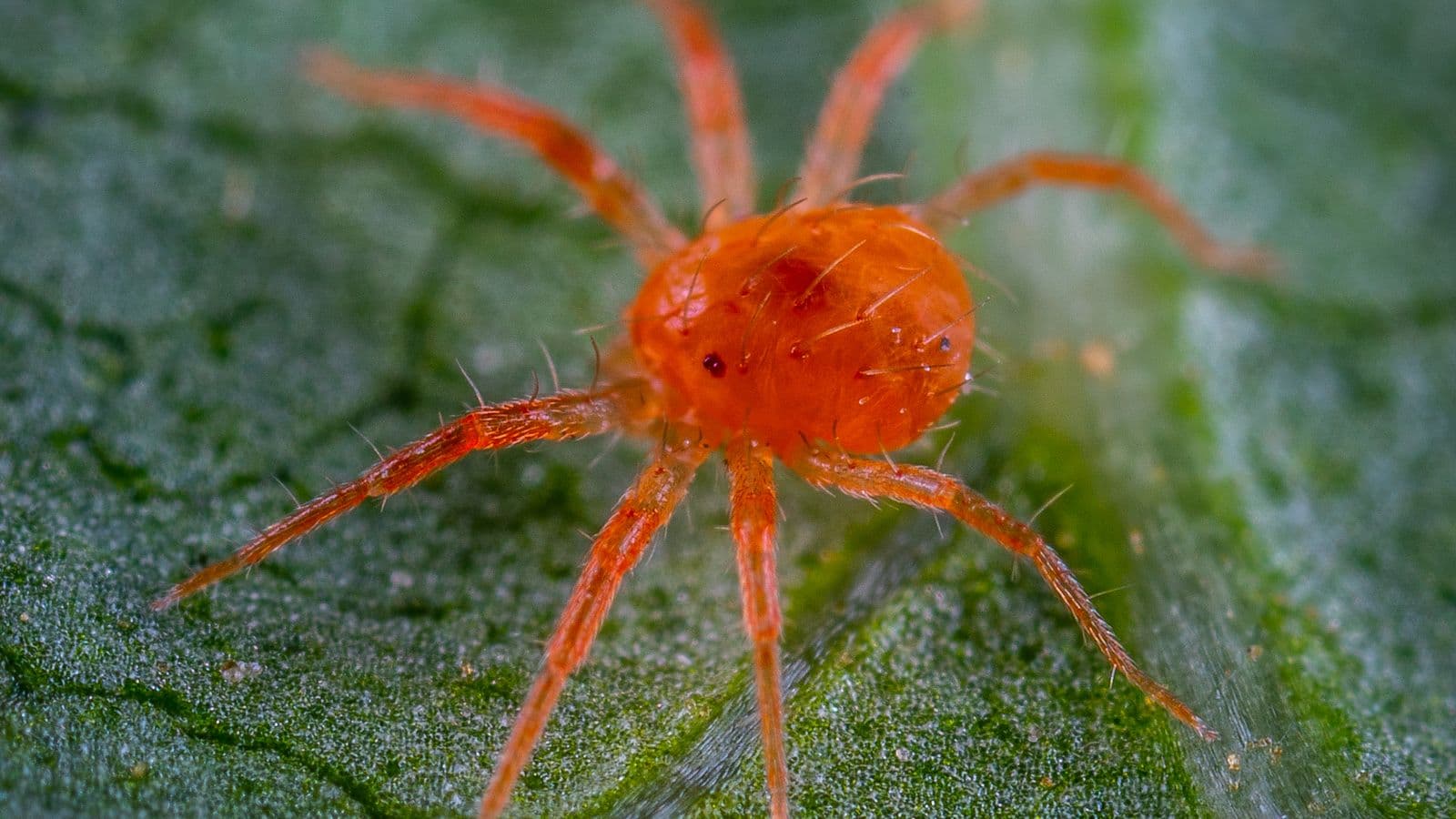
Spider mites explode in heated rooms and hide under the leaves. A three week plan that breaks the egg cycle, plus how to spot them before the webbing.
The short answer
- Spider mites explode in warm dry rooms, which is why they appear within weeks of the heating going on.
- They live on the undersides of leaves. If you are only looking at the tops, you will find them at the webbing stage.
- The first sign is fine pale stippling and a dull, dusty look to the leaf, not webs.
- One spray never works. Eggs survive it, so treat every four or five days for three weeks.
- A shower and a wipe-down removes more mites than any bottle, and costs nothing.
What you are dealing with
Spider mites are not insects. They are arachnids, closer to spiders than to greenfly, and at around half a millimetre they sit right at the edge of what the naked eye resolves. Most people never see the animal itself. They see the damage and, later, the webbing.
They feed by puncturing individual leaf cells and draining them. Each empty cell becomes a tiny pale dot, so the first symptom is a fine stippling across the leaf and a surface that has gone dull and slightly dusty compared with a healthy one. Left alone, the dots merge into bronzed or grey patches, the leaf dries, and the colony spins silk between the leaf and the stem to move around on.
The reason they take people by surprise is the speed. In a room at 20 to 22C, which is 68 to 72F, a generation takes ten to fourteen days, and a single female lays around a hundred eggs. The population is not growing steadily, it is doubling.
Why they arrive with the heating
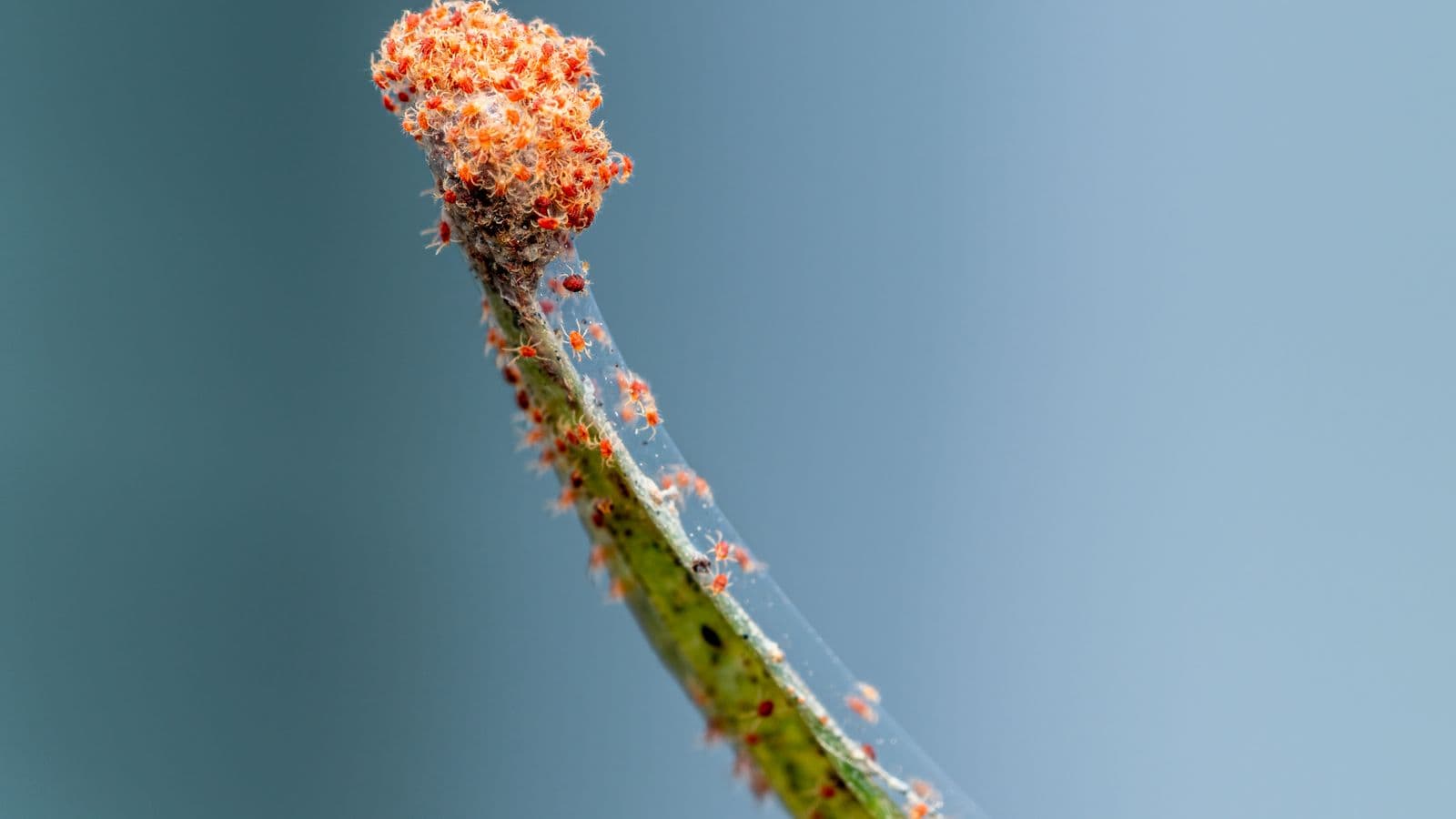
Warm dry air is close to ideal for spider mites and hostile to their predators. Central heating delivers both: room temperature stays high, and relative humidity drops to 20 or 30 per cent as warmed air expands its capacity to hold moisture. Breeding accelerates, and the plant is simultaneously under water stress, which makes it easier to feed on.
So the classic sequence is autumn. Plants come in from a summer outdoors carrying a small population nobody notices, the heating goes on a few weeks later, and by midwinter a calathea is bronzed and webbed. If you have been bringing plants back indoors, that is exactly the window to be checking.
New plants are the other route in. A nursery or shop plant can carry mites home with it, which is the argument for keeping anything new apart from your collection for a fortnight.
Find them before the webbing
Webbing is a late symptom. Catching an infestation early is entirely a matter of looking in the right place, which is the underside of the leaf.
Turn leaves over, especially near the stem
Mites congregate on the undersides along the midrib and in the angle where leaf meets stem. The tops of the leaves show you the damage, never the animal.
Do the paper test
Hold a sheet of white paper under a leaf and tap the leaf sharply. Wait ten seconds. Dust sits still. Mites walk.
Hold the leaf up to the light
Backlighting makes the stippling obvious well before it is visible from above. A healthy leaf is evenly coloured, an infested one is freckled with pale pinpricks.
Look for silk in the leaf joints
Fine threads strung between leaf and stem, or across the growing tip, are conclusive. No other common houseplant pest webs.
Check the neighbours
Every plant within touching distance, and every plant that has stood next to the affected one recently. Mites walk between leaves that overlap.
The three week plan
Everything about treating spider mites comes back to their eggs. Contact treatments kill adults and nymphs well, and barely touch eggs, which hatch within three to five days. A single thorough spray therefore looks like a cure for about a week before the next generation appears. The plan is built to catch each hatch before it can breed.
Day 1: physically remove them
Take the plant to a shower or a sink and rinse thoroughly with tepid water, undersides first and the growing tips especially. This removes the great majority of the live population and most of the webbing before any treatment goes anywhere near the plant.
Day 1: wipe what the water missed
Wipe each leaf between damp fingers or a soft cloth, supporting it from underneath. Bin the cloth or wash it hot. On a small plant this alone can end the problem.
Day 1: prune the worst
Cut off any leaf that is more than half stippled, bronzed or webbed. It will not recover, it is full of eggs, and removing it takes a chunk of the next generation with it. Bag the cuttings straight away.
Day 2: treat the whole plant
Use insecticidal soap or a horticultural oil, following the label dilution, and cover every surface: undersides, stems, leaf joints and the compost surface. These work by contact and by smothering, so anything you miss survives. Treat out of direct sun to avoid scorching wet leaves.
Days 6, 11, 16 and 21: repeat
Treat again every four or five days for three weeks without exception. Each round catches the mites that have hatched since the last one, before they are old enough to lay. Stopping early because the plant looks better is the single most common reason infestations return.
Week 4: inspect, do not assume
Do the paper test again and check the undersides. Only return the plant to the collection after a clear check, and keep looking weekly for a month afterwards.
What does not work
One heroic spray. Covered above, and worth repeating because it is what most people do.
Misting. Mites dislike humidity, but a mist lasts minutes. It neither kills them nor meaningfully changes the room.
Treating the tops of the leaves. They are not there. A contact treatment that never reaches the undersides is a contact treatment that never makes contact.
Household detergent or washing-up liquid. The concentration is unpredictable, some formulations strip the waxy layer from the leaf, and the results range from useless to scorched. Insecticidal soap is a specific product for a reason.
Treating one plant and stopping. Mites will already have walked to whatever was touching it. Check the neighbours before you congratulate yourself.
Predatory mites, for anything you cannot rinse
A mature fig, a large palm or a plant you cannot carry to the shower is a genuinely awkward case, because the whole plan above depends on physically reaching every underside. Biological control solves that by sending something smaller than you are.
Phytoseiulus persimilis is a predatory mite sold by mail order that eats spider mites and nothing else. You tip the carrier material onto the leaves and the predators go looking. They reach the leaf joints and undersides that a spray bottle never covers, and they keep working for weeks. Two releases a fortnight apart is the usual recommendation for an established infestation.
There are two conditions. Predatory mites need warmth and reasonable humidity to be effective, so a bright heated room suits them and a cold hallway does not. And you cannot use them alongside a contact treatment, which kills them as readily as the pest, so pick one approach and commit to it.
What recovery actually looks like
Stippled leaves do not turn green again. The cells the mites emptied are dead, and a leaf that is bronzed or freckled will stay that way for as long as it stays on the plant.
That matters for judging whether you are winning. Do not look at the damaged leaves for reassurance. Look at whether new stippling is appearing on leaves that were clean last week, and at the paper test. If the damage stops spreading and the growing tips come through unmarked, the treatment is working, however unattractive the older foliage remains.
Remove the worst leaves as the plant produces replacements, a few at a time rather than all at once, and expect a heavily hit plant to take a full season to look like itself again.
Keeping them gone
Mites come back to the same conditions that suited them the first time, so the follow-up is environmental rather than chemical.
Raise the humidity around the plants most likely to be hit. Grouping pots together, standing them on trays of wet pebbles clear of the water line, or running a humidifier in the room all make a heated room measurably less hospitable. Keep plants off the rising air above radiators.
Quarantine every new plant for two weeks in a room away from the collection, and check the undersides before it joins the others. Do the same for anything that has spent the summer outdoors.
Build a habit of turning a few leaves over whenever you water. The whole difference between a ten minute problem and a three week campaign is how early you look.
Check these first
- Calatheas, marantas and alocasias
- Thin leaves, high humidity needs and a heated room. The classic casualties, and usually the first plant in the house to show stippling.
- Palms, particularly areca and kentia
- Dense, fine foliage that is awkward to rinse thoroughly, which is exactly why colonies establish in it.
- Scheffleras and figs, including fiddle leaf figs
- Large leaves with plenty of underside to hide on, and often too big to carry to the shower easily.
- Anything recently brought in from outdoors
- Position matters more than species here. A summer outside means passengers, whatever the plant is.
Less often troubled
- Snake plants and ZZ plants
- Tough, waxy leaves that mites find hard work. Not immune, but rarely first.
- Cacti and most succulents
- Thick skins and low humidity needs. Watch for the different mite species that attack cacti, which leaves rusty scarring.
- Aspidistra
- Thick leaves and a general refusal to be bothered by anything.
When you want the identification confirmed
Stippling, bronzing and a dusty leaf surface are not unique to spider mites. Thrips produce something similar, and so does a plant burning in too much direct sun. Treating for three weeks is a lot of effort to spend on the wrong diagnosis.
Photograph an affected leaf with Folly and Plant Doctor will match it against 500+ diseases and pests, then give you a step-by-step treatment plan with a recovery timeline and prevention notes, so you know both what you are dealing with and when to stop. Because dry air and drought stress are what let mites take hold in the first place, Folly's Smart Care schedules matter here too: each plant's watering interval is rebuilt from pot, light, season and your local weather, with every factor shown along with the percentage it contributed, so plants go into the heating season properly watered rather than already stressed.
Our guide to clearing fungus gnats covers the other pest that arrives with autumn, and the winter care guide deals with the dry heated air that causes both.
Questions people ask
How do I know if I have spider mites or just dust?
Hold a sheet of white paper under a leaf and tap the leaf sharply. Mites fall off and appear as specks that move across the paper after a few seconds. Dust does not move. The other reliable tell is fine silk webbing strung between a leaf and its stem, which no other common houseplant pest produces.
Will one spray get rid of spider mites?
No. Contact sprays kill the mites they touch and do almost nothing to the eggs, which hatch a few days later. That is why a single treatment looks like a cure for a week and then fails. Treat every four or five days for at least three weeks so each new batch is killed before it can breed.
Can spider mites spread to my other plants?
Easily. They walk between touching leaves, travel on your hands and clothes, and drift on air currents. Move an infested plant away from the others the moment you find it, and check every plant within a metre of where it was standing, undersides included.
Does raising humidity get rid of spider mites?
It slows them down rather than clearing them. Spider mites breed fastest in warm dry air, so a humid room is a hostile one, but humidity alone will not clear an established colony. Use it to stop them coming back once you have treated the plant.
Should I throw an infested plant away?
Rarely. Most plants recover fully if you catch it before the leaves are stippled grey and webbed over. Consider binning a plant only when it is heavily infested, cheap to replace and standing among a collection you would rather protect. Bag it before it crosses the room.
Keep reading
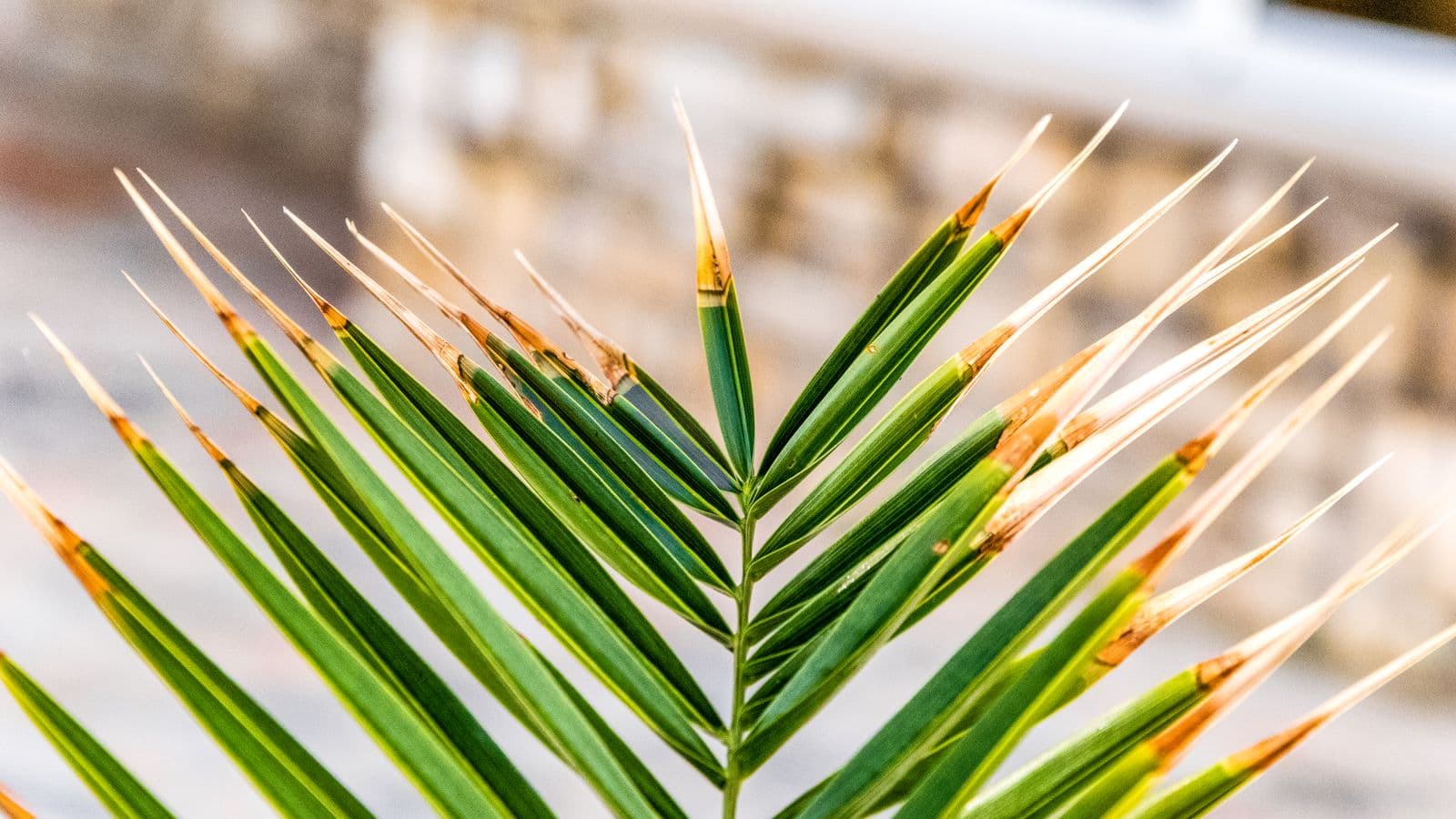
Why Are My Houseplant's Leaf Tips Turning Brown?
Brown tips are a symptom, not a diagnosis. How to tell dry air from salt build-up, thirst from failing roots, and what to change for each one.
How Often Should You Water Houseplants?
Once a week is the answer that kills plants. What actually sets a watering interval, how to read a pot in ten seconds, and how to water properly.
Why Is My Peace Lily Drooping, and How to Revive It
A drooping peace lily is usually thirsty and recovers in hours. Here is how to tell that apart from root rot, cold and shock, and what to do for each.