Why Is My Cactus Turning Yellow?
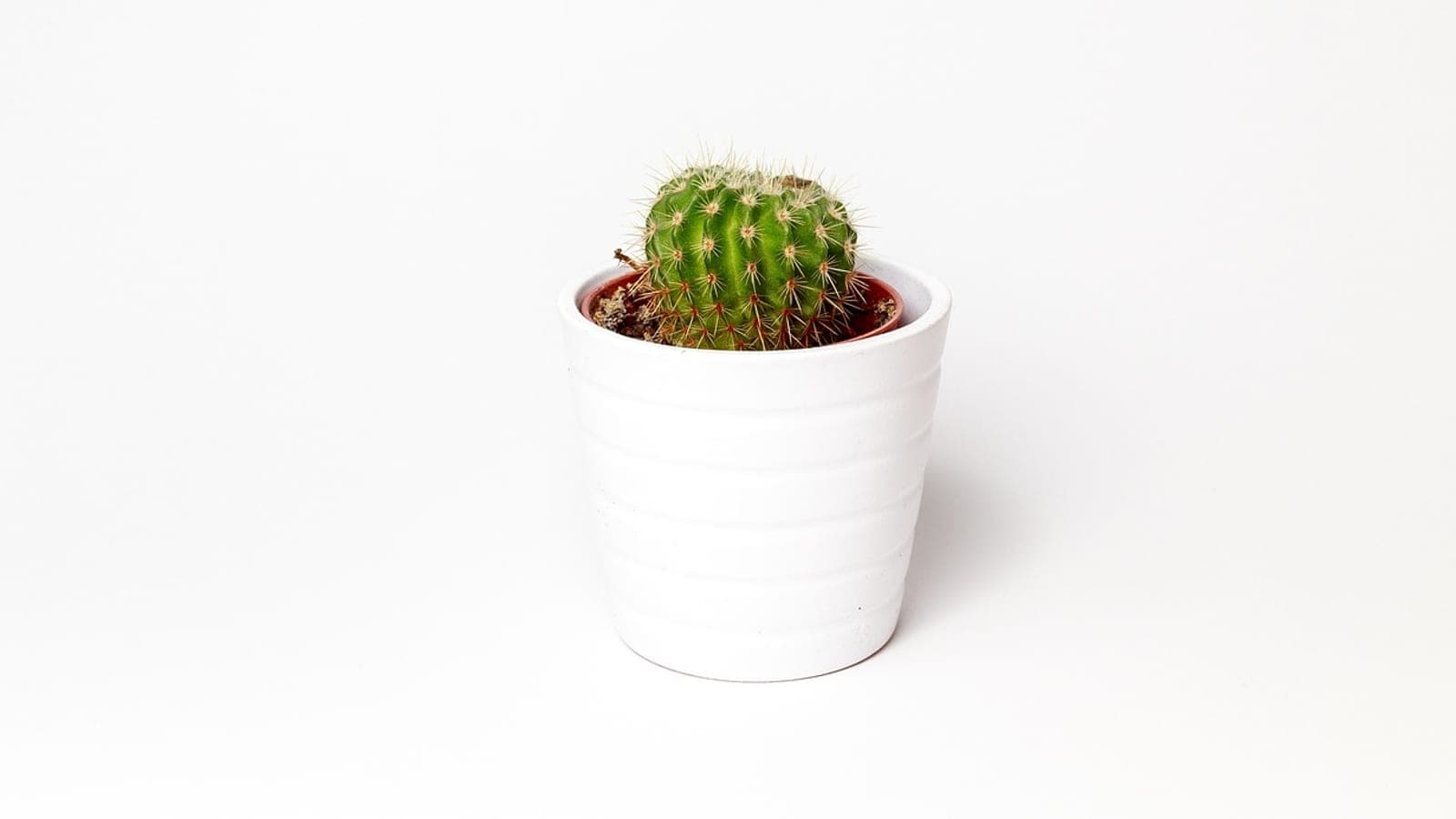
Photo by Pexels on Pixabay
A yellow cactus is usually overwatered, sometimes sunburnt or starved of light. Here is how to tell which, what to do first, and when a cactus can be saved.
The short answer
- A yellow cactus is most often overwatered. Check the compost and the base before you do anything else, and do not water it again until you have.
- Yellow that starts at the base and feels soft is rot. Yellow that is firm, on the side facing the window, is sun damage. Pale, thin and leaning is too little light.
- Overwatering rots the roots first, so the top looks fine for weeks. By the time it turns yellow, the damage underneath is well along.
- Yellow tissue will not turn green again. Your aim is to stop it spreading and get new green growth.
- If the stem is soft and mushy, cut back to firm green tissue, let the cut dry, and restart from there.
What a yellow cactus is telling you
Cacti store water in their stems and are built to go without it. That makes them tough, and it also means they give very little warning. A thirsty cactus shrivels slowly. A drowned one carries on looking plump while its roots die, then changes colour all at once.
That is why yellowing is the symptom people search for. It is a late signal. The RHS notes that these drought-tolerant plants do not like damp conditions, especially in winter, and will rot if overwatered. Most yellow cacti are in that position.
Three causes account for nearly every case:
- Too much water, which means rot from the roots up. Yellow, soft, often starting low down.
- Too much sun, suddenly, which means scorch. Yellow or bleached, firm, only on the side facing the glass.
- Too little light, which means a pale, stretched plant. Yellow-green, thin and leaning towards the window.
A fourth, less common cause is pests, covered further down.
Work out which one it is in two minutes
Do these in order. They separate the causes better than looking at colour alone.
Feel the compost
Push a finger or a wooden skewer well down into the pot. Damp at depth, days after the last watering, points to overwatering. Bone dry points away from it.
Press the yellow area gently
Firm and dry means sun damage or old scarring. Soft, squashy or wet means rot. Do not squeeze hard, because rotting tissue breaks open.
Note where the yellow sits
At the base and creeping up is rot from the roots. On one side only, facing the window, is sun. All over, pale and stretching, is poor light.
Check the drainage
A pot without a hole in the bottom, or a decorative outer pot with water collecting in it, keeps the roots wet however carefully you water.
Look for pests
Fluffy white tufts in the crevices between ribs, or hard brown bumps that scrape off, are mealybugs or scale rather than a watering fault.
If it is overwatered
This is the likely answer, and the one where speed matters.
Stop watering. Tip the plant out of its pot (wear thick gloves or fold a towel around it, because the spines will find you) and look at the roots. Healthy roots are firm and pale. Rotting roots are brown or black, soft, and often smell sour.
What to do next depends on how far it has gone:
Roots mostly healthy, a little soft. Let the root ball dry out in the open, out of direct sun. Repot into fresh, gritty compost (potting mix) that drains freely. The RHS says cacti want lots of sun and free-draining compost.
Roots rotted, stem still firm. Cut away every soft or dark root with clean, sharp scissors. Leave the plant out of its pot until the cut surfaces dry and callus over. Then pot it in dry gritty compost and hold off watering until it shows signs of new growth.
Rot has reached the stem. Cut the stem upward in clean slices until the cut face is uniformly pale green with no brown or dark flecks. Anything discoloured left behind keeps spreading. Let the cut dry until it seals over, then stand the healthy piece in dry gritty compost. It may root again in time. If the whole stem is mushy, the plant cannot be saved, and the kindest thing is to bin it and keep the pot's compost away from your other plants.
Our guide to saving a dying houseplant covers the general recovery routine and how to tell whether things are improving.
How to water a cactus so this does not happen again
The RHS says too much water can stunt growth or lead to rot, while too little causes shrivelling. That is a useful pair of limits, because the cure for each is opposite and a cactus rarely recovers well from the first.
- Water thoroughly, then wait. Soak the compost until water runs from the drainage hole, tip away what collects in the saucer, and do not water again until the compost has dried right through.
- Water less when it is cold and dark. Growth slows in winter, and the RHS adds that cold temperatures also increase the likelihood of rot. A cold, wet cactus is the classic way to lose one. That means the cold, dark months of your own hemisphere.
- Use a pot with a hole. Plastic or terracotta both work.- Skip the saucer habit. Never leave a cactus standing in water.
For the general principles of timing and testing, our guide to how often to water houseplants has the finger and weight tests, and a cactus sits at the far dry end of them.
If the yellow is sun damage
Scorch shows up as yellow, bleached or tan patches on the side of the cactus facing the glass, usually after a change: a move to a sunnier window, a spell of strong sun, or a plant moved outdoors in summer without hardening off.
The area is firm and dry, and it will not recover colour. It is a scar. Move the plant a little back from the glass, or to a position that gets bright light without the hottest hours of direct sun, and turn it a quarter each week or so for even exposure. Introduce stronger sun gradually.
Scars are cosmetic. They do not spread, and new growth will come in green.
If it is pale because the light is poor
The RHS says most cacti are sun-lovers and are not happy in poor light away from windows. A cactus in a dim room goes pale yellow-green, stretches thin at the top and leans toward whatever light there is. This is slow, and often gets blamed on watering.
The fix is a brighter spot. A window that gets the most sun across the day is right: in the northern hemisphere that is a south-facing window, and in the southern hemisphere a north-facing one. Do not move a stretched plant straight into full sun, or you will scorch the pale growth. Shift it closer gradually. The stretched section will not shrink back, but new growth at the tip will be compact and green if the light is right.
Pests that make a cactus look yellow
Mealybugs sit in the crevices as white cottony tufts, and sap-feeding scale insects stick to the ribs as small domes. Both weaken the plant, and heavy infestations leave yellowing patches. Our guide to scale insects on houseplants shows what to look for and how to deal with them. For anything beyond a light infestation, a houseplant insecticide of the right type works, but check it is approved for houseplants where you live and follow the label.
Which cacti and succulents yellow most easily
Yellow quickly when overwatered
- Small round and barrel cacti
- A single fat stem sitting on a small root system. Rot at the base can reach the core before anything shows on top.
- Thin-stemmed columnar cacti
- Less water stored, so rot moves fast and the stem softens at the soil line.
- Cacti in decorative pots without a hole
- Water pools at the bottom and the roots never get to dry out, whatever your watering routine.
Forgive a missed watering
- Cacti in terracotta with gritty compost
- The pot wicks moisture away and the grit lets air reach the roots, so a heavy hand does less harm.
- Established plants in a bright, warm spot
- They use water quickly in good light, which keeps the compost from staying wet.
- Cacti given a dry, cool winter rest
- They stop growing and need very little water, so there is nothing to rot.
If the yellowing is on a different houseplant altogether, see why houseplant leaves turn yellow. Aloe vera, which gets the same treatment as a cactus, has its own guide on why aloe turns brown.
Let Folly help you tell which one it is
The hard part is that overwatering, sun and poor light can all leave a cactus yellow, and the answer is rarely obvious from across the room. Photograph the yellow patch and Plant Doctor checks it against 500+ diseases and pests, then gives you the likely cause, what it looks like, what causes it, how to prevent it and what to do first. That is free on every plan.
If it finds a problem Folly can treat, "Fix my plant" on Folly Pro asks a few quick questions, such as what it grows in and how the soil feels, and builds a day-by-day recovery plan, with check-in reminders and a "Something has changed" button if it gets worse.
To stop it happening again, Smart Care schedules on Folly Pro build each plant's watering interval from more than 15 attributes, including the pot, the light in that room, the season and your local weather. Tap any plant and every factor is listed with the percentage it added or removed, so you can see why a cactus gets a very different interval from a fern.
Questions people ask
Why is my cactus turning yellow at the base?
Yellow, soft tissue at the base is almost always rot working up from the roots, caused by compost that stays wet. Stop watering, lift the plant out and look at the roots. Firm and pale means the roots are fine and the yellowing has another cause. Brown or black and mushy means rot, and the plant needs cutting back to healthy tissue and drying out before it is repotted.
Can a yellow cactus turn green again?
Tissue that has gone yellow from too much water or too little light does not turn green again. What matters is whether the yellowing stops spreading. New growth coming in green and firm means you have fixed the cause. Sun-bleached patches stay pale for good but are harmless once the plant is moved out of the glare.
Why is my cactus turning brown as well as yellow?
Dry, corky, tan or brown patches on the sunny side are usually sunburn or a healed old wound, and they are cosmetic. Brown that is soft, dark and damp is rot. Press gently: hard means old scar tissue, squashy means trouble. Rot spreads, so act the same day.
How do I know if I have overwatered my cactus?
The compost is still damp days after watering, the plant feels soft or squashy and may lean or wobble, and the colour turns from healthy green to yellow, often starting at the base. A plant that has been overwatered for a while can look fine on top until the rot reaches the stem.
Why is my cactus turning white?
Fluffy white patches that rub off are usually mealybugs, and hard white or tan bumps are usually scale. Both are pests and both need treating. A pale, bleached, smooth patch on the side facing the window is sunburn instead, and a pale stretched top on a tilting cactus means it is not getting enough light.