Brown Spots on Leaves of Indoor Plants, and What Each Kind Means
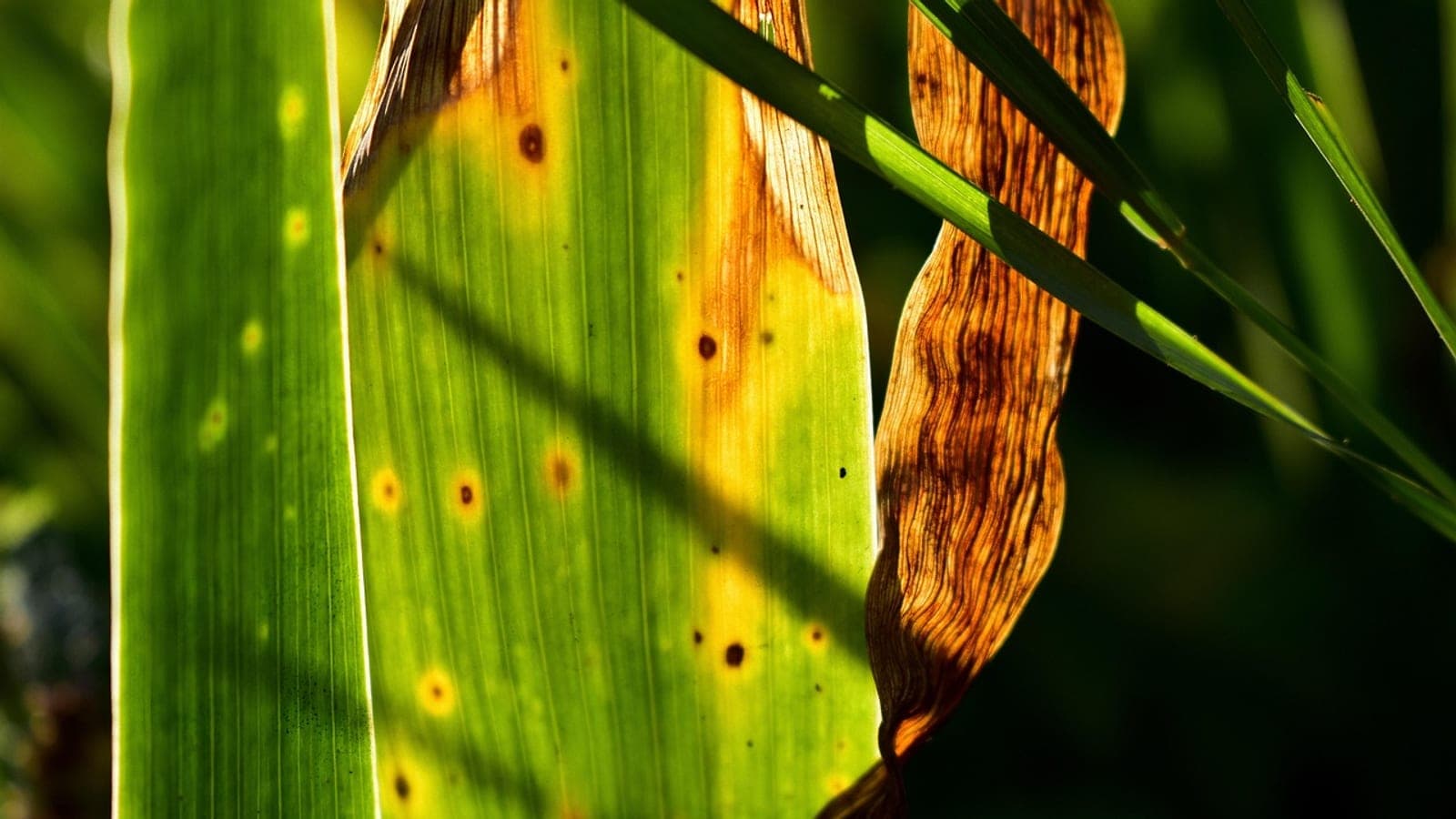
Photo by grom900 on Pixabay
Brown spots on indoor plant leaves come from fungus, bacteria, scorch, salts or pests. How to read the spot, what to do first, and when to cut the leaf off.
The short answer
- Look at the spot, not just the plant. A small spot with a yellow ring is usually leaf spot. A dry, pale or crisp patch on the sunny side is scorch. A big soft brown area is usually roots.
- Move the plant away from its neighbours, stop wetting the leaves and remove the worst-marked leaves. These three steps handle most leaf spot with no products.
- Check the compost (potting mix) before you water again. Too much water is behind more brown spotting than any disease.
- Spots never turn green again. Judge your fix by the leaves that open next.
- If the spots are sticky, silvery, or have fine webbing, it is a pest rather than a disease.
Read the spot before you act
Brown spots look alike from across the room and have very different causes. Three details separate them: the shape and edge of the spot, where on the plant it appears, and what the leaf feels like.
Look at the edge
A yellow ring around a small brown spot is the classic sign of leaf spot. A pale, bleached or papery patch with no ring is more likely scorch or dry air.
Note where it is
Spots on the leaves facing the window point to sun. Spots on the lowest, oldest leaves point to roots or old age. Spots on the leaves touching a neighbour or a cold pane point to damp or cold.
Touch it
Dry and crisp is scorch, salts or dry air. Soft, wet or slightly sunken is rot or bacteria. Sticky or gritty means look underneath for pests.
Check the pot
Push a finger a few centimetres (an inch or two) into the compost. Wet days after watering, or a sour smell, means the roots are the real problem.
Turn the leaf over
Fine webbing, tiny moving dots or a silvery stipple on the underside mean a pest is behind the marks, not a disease.
Leaf spot: small, ringed and spreading
This is the one most people mean by brown spots. Clemson's extension service describes fungal spots as "small, brown spots with yellowish margins on the leaves". Penn State adds that they are oval, brown or black, "not limited by leaf veins", which is how you tell them from damage that stops at a vein.
Bacterial leaf spot looks similar. Clemson says the spots enlarge and run together in wet conditions, so a leaf that stays damp can end up with one large blotch.
Both need water sitting on the leaf, and the fungal kind spreads by spores. Penn State notes that airborne spores spread to healthy leaves, so one spotted plant can seed the rest of a shelf.
What to do, in order:
- Isolate the plant. Move it away from others while you sort it out.
- Remove the worst leaves. Penn State advises pruning and discarding infected parts as soon as you detect a problem, and Clemson says to pick off and destroy infected leaves. Put them in the bin, not on the compost heap.
- Stop wetting the foliage. Clemson says to avoid splashing water on the foliage since this spreads the fungi. Water at the base of the plant, and stop misting. Our guide to bottom watering covers a good way to keep leaves dry.
- Give it air. Crowded plants in a still room hold moisture on their leaves for longer. A little space between pots does a lot.
- Clean up the pot. Remove fallen leaves from the compost surface, because they carry spores.
Waterlogged roots: big, soft, brown patches
If the brown areas are large and soft rather than small and ringed, look down, not at the leaf. Penn State describes root rot as a soil-borne fungus that causes wilting and blackened, mushy roots. Clemson is direct about the cause: do not overwater, since too much water increases the occurrence of root rot.
The leaves often show it before the roots do. Brown blotches appear on the lower leaves, yellowing starts at the base of the plant, and the whole thing looks limp even though the compost is wet. If this sounds right, our guides to how often to water houseplants and why houseplant leaves turn yellow will help you find what went wrong.
Slide the plant out and look. Firm, pale roots are healthy. Brown or black, soft and slipping roots are rotting. Cut those away with clean scissors, repot into fresh potting mix in a pot with drainage holes, and water once, lightly. Then wait. A plant with fewer roots needs much less water than before.
Scorch: dry, pale and facing the window
Sunlight through glass is stronger than it feels, particularly on a plant that spent the winter further back in the room. Scorch gives a dry, pale to brown, papery patch on the leaves nearest the glass, often with a sharp edge and no yellow ring. It also appears when a plant is moved suddenly into brighter light, or when a drop of water on the leaf acts as a tiny lens.
Move the plant back from the glass, or hang a sheer curtain, and the new leaves come in clean. The scorched patches stay. Which window is "sunny" depends on where you live: it is the south-facing side in the northern hemisphere and the north-facing side in the southern, so go by the window that gets the most direct sun.
Salts and dry air: crisp brown edges
When the brown is at the edge or tip rather than in the middle of the leaf, the cause is often dry air or mineral salts. Clemson says white to grey crusty deposits on the soil surface or rim of pots are a sign of salt buildup. If you see that crust, flush the pot with plenty of plain water and let it drain fully. Our guide to brown tips on houseplant leaves goes through this cause in detail, along with dry air and thirst.
Pests that look like spots
Some "spots" are insect damage. Spider mites leave a fine stipple of pale or brown dots with webbing under the leaf, and spider mites love warm, dry rooms. Thrips leave silvery, scratchy patches, covered in our guide to thrips on houseplants. Scale insects sit on the leaf as brown bumps that can be rubbed off with a fingernail, and sticky leaves are a clue to several pests at once. If you can wipe the spot away or it feels sticky, work through the guide to sticky leaves on indoor plants.
Which plants mark first
Spot and scorch readily
- Calathea and prayer plants
- Thin leaves mark at the first dry spell, cold draught or splash of hard water.
- Fiddle-leaf fig
- Large, glossy leaves show every spot, and root rot often appears first as brown patches on the lower leaves.
- Monstera
- Big leaves stay damp in crowded corners, so ringed spots and scorch both turn up here.
Hide marks well, or recover fast
- Snake plant and ZZ plant
- Thick leaves resist most spotting. A brown mark here is usually from a cold pane or from rot at the base.
- Pothos, also sold as devil's ivy
- Tolerates most mistakes. When it spots, the cause is usually overwatering.
- Succulents and cacti
- Mostly mark from sunburn or rot at the base, rarely from leaf spot.
Stop guessing what the spot is
The hard part with brown spots is that the same-looking mark can be a fungus, a sunburn or a root problem, and the treatments are opposites. Folly's Plant Doctor is built for exactly this. Photograph the leaf and it matches the spot against 500+ diseases and pests, then gives you the likely cause, what it looks like, what causes it, how to prevent it and what to do first. It is free on every plan.
When a health scan finds a problem it can treat, "Fix my plant" on Pro asks a few quick questions about what the plant grows in, how the soil feels and when it was last watered, and builds a day-by-day recovery plan with check-ins and reminders. Your usual watering reminders pause while the plan runs, so you are not tempted to water a plant that needs to dry out.
On Folly Pro, Smart Care schedules also help prevent the most common cause behind these spots. They set each plant's watering interval from 15+ attributes and show every factor, with the percentage it added or removed, so you can see why a plant is due and not just trust a number. For a related problem, see our guide to why houseplant leaves turn yellow.
Questions people ask
Why does my monstera have brown spots on its leaves?
The same causes as any other plant, read the same way. Small spots with a yellow ring on a leaf that stays wet point to leaf spot. A dry, papery patch on the side facing the window is scorch. Large soft brown areas that arrive with yellowing lower leaves point to waterlogged roots. Check the pot and the pattern before you treat anything.
What are black spots on the leaves of indoor plants?
Usually the same problem at a later stage. Fungal and bacterial leaf spots often darken from brown to black as the tissue dies, and tiny black dots in the middle of an old spot can be the fungus itself. Black, soft and spreading quickly, especially near the stem, suggests rot, so check the roots.
Will brown spots on leaves go away?
No. Dead tissue does not turn green again. What you can do is stop new spots forming. If the next leaves to open are clean, the fix has worked. Remove a badly marked leaf if it bothers you, but leave leaves with only a spot or two, because they still feed the plant.
Should I cut off leaves with brown spots?
Cut off leaves with fungal or bacterial spots, because spores spread to healthy leaves. Leaves marked by scorch, salts or old damage can stay until the plant has put out new growth. Use clean scissors, cut at the base of the leaf stalk, and put the leaf in the bin rather than on the compost heap.
Can I spray brown spots with fungicide?
Physical fixes come first: remove affected leaves, keep the foliage dry and give the plant more air. A product for fungal leaf spot is a last resort. If you use one, check it is approved for houseplants where you live and follow the label. It will not repair spots that already exist.
Does misting cause brown spots?
It can. Water sitting on the leaf is what fungal and bacterial leaf spot need, so frequent misting gives them what they want, particularly in a room with poor airflow. It also leaves mineral marks on the leaf if your water is hard. Raise humidity by grouping plants instead.