Why Does My Spider Plant Have Brown Tips?
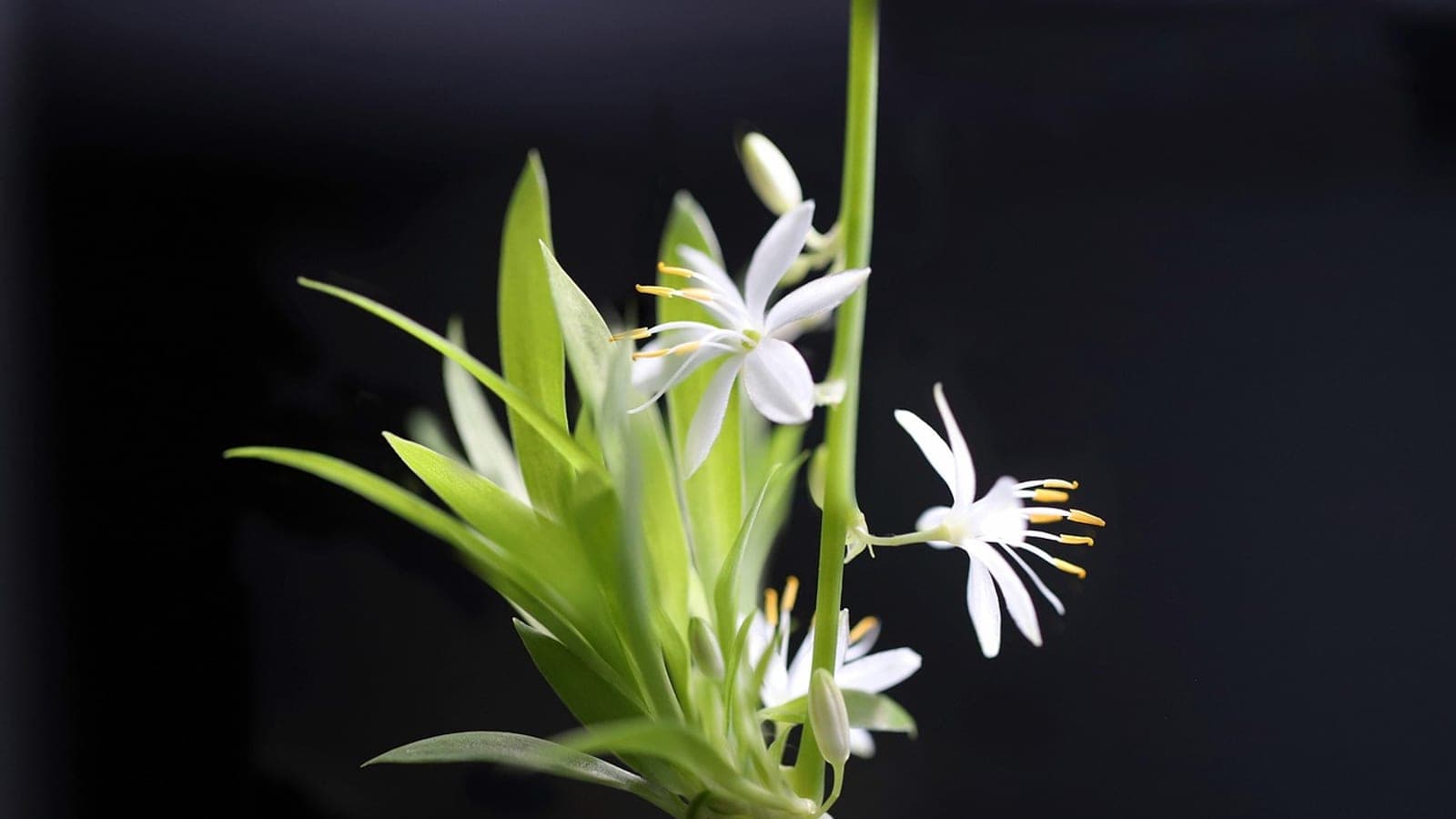
Photo by Nennieinszweidrei on Pixabay
Brown tips on a spider plant are almost always salts in the compost or very dry air. How to tell which, what to change, and how to trim them tidily.
The short answer
- The usual cause is salts. Feed and tap water leave minerals in the compost, and they collect at the leaf tip, which is the last stop for water.
- The second cause is dry air or compost that dries out completely between waterings.
- Check for a white crust on the compost, then flush the pot with plenty of water through the drainage holes.
- The brown tips you can see will not turn green. Trim them tidily and judge your changes by the new leaves.
- If the brown is soft, spreading or comes with yellowing, look at the roots instead.
Why the tips go first
Water travels up through a plant and evaporates from the leaf surface. The tip of a spider plant leaf sits furthest from the roots, so anything in short supply runs out there first. Anything in excess, including dissolved salts, is carried there and left behind as the water evaporates.
That is why brown tips are the standard spider plant complaint. The plant is tough and forgiving of a lot, but its long, narrow leaves make the tips unusually easy to mark. A spider plant with brown tips is usually a healthy plant with one thing slightly off.
For the wider picture across all houseplants, our guide to brown tips on houseplant leaves covers the other plants and the other causes. This article stays with spider plants.
Cause one: salts from feed and water
This is the most likely culprit, and it is the one people miss. Clemson's extension service is direct about it: leaf tip burn is caused by too much fertilizer or water that is high in soluble salts.
Every watering brings dissolved minerals into the compost (potting mix), and every dose of plant food brings far more. Water leaves through the leaves and the compost surface. The salts stay. Given months, they build up enough to burn the leaf edge.
Look for these signs:
- A white or pale crust on the compost surface.
- A chalky ring around the inside of the pot rim.
- Sharply defined brown tips with no yellow halo.
- Damage worst on the oldest leaves, which have had longest to collect salts.
How to flush the pot
Take it to a sink or shower
Work somewhere the water can run freely. You are washing the compost, not topping it up.
Water slowly with tepid water
Keep pouring until a generous amount has run out of the drainage holes. Repeat a couple of times, leaving a few minutes between rounds.
Let it drain completely
Do not put the pot back in a cover pot or saucer until it has stopped dripping. Salty water left standing at the bottom undoes the job.
Ease off the plant food
Feed only while the plant is actively growing, and use less than the label suggests if the tips keep browning. Skip it altogether when growth stops over winter.
Repeat now and then
A flush every few months is enough for a plant you feed regularly, or one on hard water.
If the crust keeps coming back and the tips keep browning, try rainwater and compare the new leaves after a couple of months. If they come through clean, the water was the cause.
Cause two: dry air and dry compost
The same Clemson factsheet adds that low humidity and excessively dry soil may also cause brown leaf tips.
Dry air is a problem in any heated room, and in a hot, sunny room too. Warm air holds more moisture, so when a room is heated the relative humidity falls, and the leaf loses water faster than the roots can replace it. The result is a thin, papery brown rim, sometimes with a narrow yellow band inside it, building up over weeks.
Dry compost is the other half. Spider plants like to dry out a little between drinks, and the Clemson guide says spider plants should be allowed to dry out briefly between waterings. Briefly is the important word. If the pot goes bone dry for days, then gets a flood, the leaf tips pay for it. The signs are crisp tips that all appeared together, on a plant you realise you forgot.
A pot that is packed with roots makes this worse. Roots circling the base or pushing out of the drainage holes mean there is almost no compost left to hold water, and the pot dries within a day or two of every watering. Move the plant up a single pot size and the tips usually settle.
Cause three: light that is too strong
Spider plants do best in a bright room, out of the hardest sun. According to Clemson, they grow best with bright indirect light, and while they can tolerate some direct sunlight, midday light may scorch the leaves.
Scorch looks different from salt damage. It comes as pale, bleached patches or brown marks across the leaf, not just at the tip, and only on the side facing the glass. A sunny window in the southern hemisphere faces north, and in the northern hemisphere faces south. Either way, pull the plant back from the glass or put a sheer curtain between them during the brightest part of the day.
When the brown is soft: look at the roots
Everything above gives you dry, crisp, sharply edged tips. If the brown is soft, creeps in from the edge in patches, or arrives with yellowing leaves, suspect the roots instead. Compost kept wet drives the air out of the pot, roots suffocate and rot, and the leaf edges go brown even though the pot is full of water.
Slide the plant out of its pot. Healthy spider plant roots are firm, thick and pale. Rotting ones are dark and soft, and smell sour. Cut away every soft root with clean scissors, repot into fresh, free-draining compost in a pot with drainage holes, and then water once, lightly. Our guide to how often to water houseplants explains how to judge when the next drink is due.
Trimming brown tips
Fix the cause first. Trim before you change anything and the next leaves brown in exactly the same way.
Then use clean, sharp scissors and cut along the leaf's own outline, tapering to a point as the leaf does. Leave a hairline of brown behind. Cutting into green tissue creates a fresh wound, and that browns within days. Take a whole leaf off at the base only when most of it has gone.
Spider plants also throw out long stems with small plantlets on the end. Those are fine to leave, and they are a good sign of a plant that is content. If the plant is putting its energy into lots of plantlets and the leaf tips are browning, a bigger pot and a careful flush will usually help more than anything else.
Pets and spider plants
Many people search this question with a cat that chews the leaves in mind. The ASPCA lists the spider plant as non-toxic to dogs and cats, so brown tips are a cosmetic problem rather than a hazard. Constant nibbling does leave ragged, brown-edged leaves, though, which is worth ruling out before you blame the compost.
Catching the cause before the tips brown
Most of what browns a spider plant comes back to water: too little, too much, or water carrying too many dissolved salts. That is a scheduling problem more than a knowledge problem, and it is what Folly's Smart Care schedules are built for.
Folly sets each plant's watering interval from more than fifteen attributes, including the pot size and material, the light in that room, the season and the weather where you live. Tap any plant and you see every factor behind its interval, with the percentage it added or removed. Most apps hand you a number and ask for trust. Folly shows its working.
If you would rather have the diagnosis checked than rely on reading the leaf yourself, photograph it. Plant Doctor matches it against 500+ diseases, pests and deficiencies, then gives you a step-by-step treatment plan with a recovery timeline and prevention notes. It is useful when the damage does not fit any of the patterns above, and for spotting pests such as spider mites that can look like tip burn at first glance. The plants that suffer alongside spider plants are covered in our guide to curling calathea leaves.
Questions people ask
Should I cut the brown tips off my spider plant?
Yes, once you have dealt with the cause. Use clean, sharp scissors and follow the natural taper of the leaf, leaving a hairline of brown rather than cutting into green tissue. A cut through living tissue browns again within days, so a straight chop across the leaf only gives you a new brown edge. Trimming is purely cosmetic and does the plant no harm.
Will the brown tips turn green again?
No. Dead leaf tissue cannot recover, so the tips you can see are a record of something that has already happened. Judge whether your changes are working by the new leaves coming up from the centre of the plant.
Is tap water the reason my spider plant has brown tips?
It can be, if the water carries a lot of dissolved minerals. A white crust on top of the compost points to salts. Rainwater is a cheap test: use it for a couple of months and watch the new leaves. If they come through clean, the water was the cause.
Why does my spider plant have brown tips and yellow leaves too?
Yellowing alongside brown tips usually means the roots are struggling, either from compost kept wet or from a pot packed solid with roots. Slide the plant out and look. Firm, pale roots are healthy. Dark, soft ones are rotting and need fresh compost and a pot that drains.
How often should I water a spider plant?
When the top layer of compost has dried out, rather than on a fixed day. Spider plants store water in thick roots, so they cope with a missed watering far better than with constantly wet compost. Check with a finger, and water thoroughly when it is dry.