Thrips on Houseplants: Spotting the Silver Damage
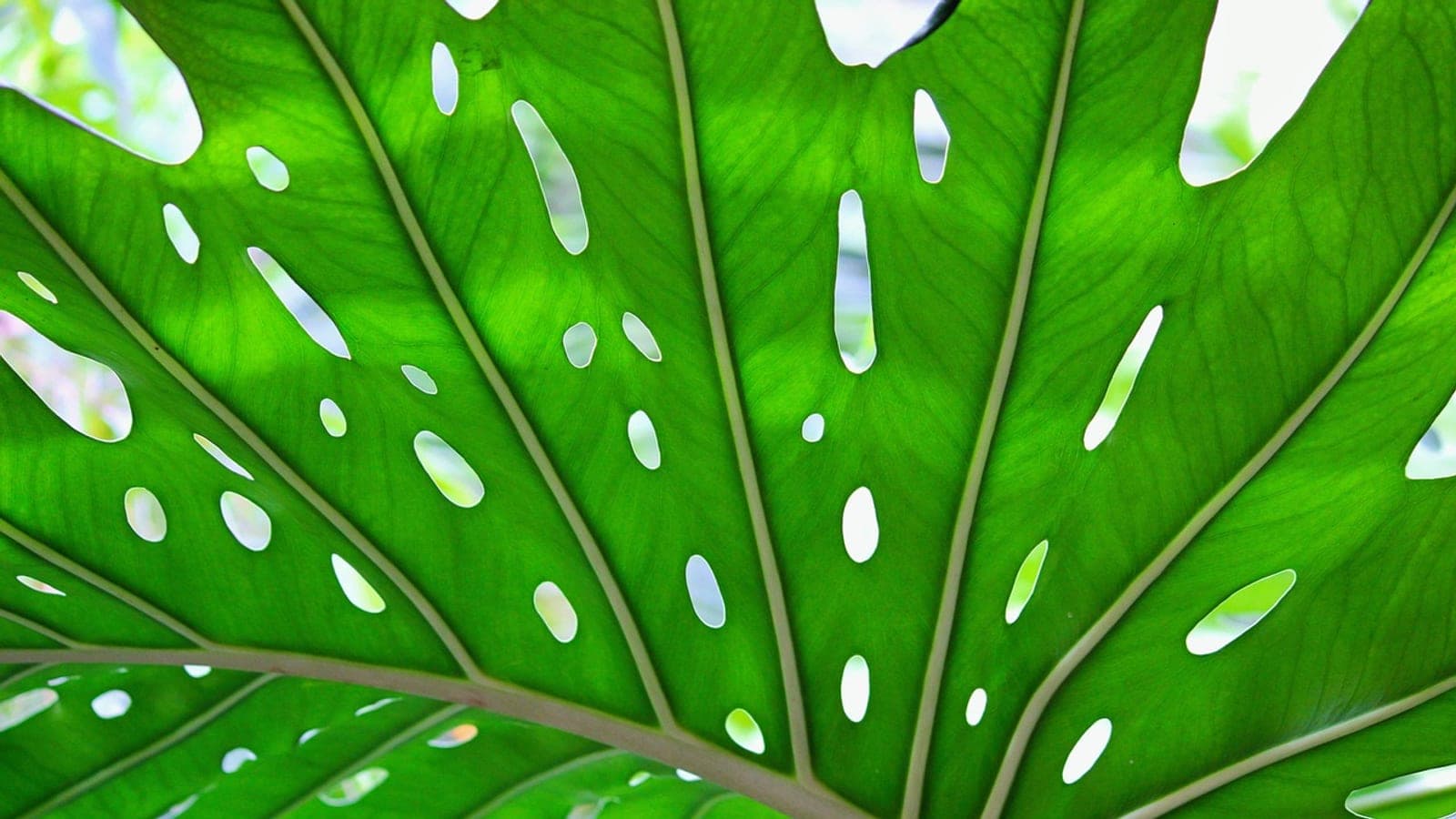
Photo by javallma on Pixabay
Silvery streaks and tiny black specks on a leaf usually mean thrips. How to confirm it, what actually clears them, and which plants they favour.
The short answer
- Silvery, papery streaks on the top of a leaf, plus tiny black specks underneath, point to thrips.
- Monstera, ficus and palms are favourites. They are tough-leaved plants that rarely look unwell until the damage is well along.
- Isolate the plant, wash the leaves, use blue sticky traps, and repeat for several weeks. One clean is never enough.
- Silvered patches do not recover. Judge success by healthy new growth.
- If the streaks have webbing or a sticky shine, it is a different pest. The checks below tell you which.
What thrips damage looks like
Thrips are slim insects, small enough that you will often meet the damage before you meet the pest. They rasp the surface of a leaf and drink what leaks out, which leaves the leaf looking silvery.
The RHS describes it this way: leaves fed on by thrips "often become dull green and later develop a silvery-white discolouration on the upper surface". Feeding also causes flecking and stunted growth, so new leaves can unfurl small and crumpled.
The second sign is dirt. Thrips leave dark specks of excrement on leaves, which you will see as tiny black dots. A silvery streak with black dots next to it is close to a signature.
Which plants? The RHS lists houseplants with relatively tough leaves, including Ficus, Dracaena, Citrus, Monstera, Schefflera and palms. If you are looking at a monstera with pale streaks, thrips should be near the top of your list, though a yellowing monstera has other possible causes too.
Check it is thrips, not something else
Several pests produce a washed-out look. Thirty seconds with a magnifying glass (your phone camera on zoom works) separates them. If the leaf is sticky, our guide to sticky leaves on indoor plants covers the pests behind that, and scale insects are the usual culprit for brown bumps.
Turn the leaf over
Thrips damage shows on top as silver streaks, with black specks underneath. Spider mites cluster underneath too, but they leave fine webbing in the angle of the veins.
Tap the leaf over white paper
Thrips are slender and quick, and look like moving commas or grains of dark sand. Spider mites look like moving dots. Nothing falling does not rule thrips out, because the larvae hide.
Touch the leaf
A sticky shine means scale insects, mealybugs or aphids, not thrips. Find which pest before you treat.
Look at the new growth
Thrips like soft, young tissue. Crinkled, stunted new leaves with silver flecks fit. Brown, hard bumps on stems and leaf veins are scale, and need a different treatment.
How thrips get a hold
Thrips are rarely something you did wrong. They arrive on a new plant, on cut flowers, or on a warm day through an open window, and they do well in warm indoor rooms.
Their life cycle is the reason one clean fails. Thrips hatch from an egg and go through two feeding larval stages before they become adults. Clean the plant once and you remove the stages you can reach. Any that were missed keep developing, and you are back where you started within days.
How to get rid of thrips
Physical and cultural fixes come first, and they work on their own if you keep at them.
- Isolate the plant. Move it away from every other plant, especially any with soft new growth. Thrips fly, so keep it in a room with the door closed if you can.
- Remove the worst-hit leaves. Cut off leaves that are mostly silver or crumpled and bin them, not compost them. Fewer leaves means fewer places to hide.
- Wash the plant. Rinse the leaves under a gentle shower or wipe both sides with a damp cloth, top and underside, and along the stems. Support the pot so the compost does not wash out.
- Hang blue sticky traps. The RHS says that blue sticky traps hung above or among plants in a glasshouse can trap thrips, and a conservatory or sunroom is the closest match indoors. They are also a good early warning for your other plants.
- Deal with the compost. Scrape off the top layer of compost (potting mix) and replace it with fresh, in case any stages are in the surface. Clean the saucer and the pot rim as well.
- Repeat every few days for several weeks. This is the step that decides whether it works. Stop when you have gone a few weeks with no new silvering and no black specks on fresh leaves.
If that is not enough, a spray labelled for houseplants and for thrips is the next step. Check it is approved for houseplants where you live and follow the label exactly. Sprays reach only the stages that are exposed, so the repeat schedule matters even more with one. Be careful with any product on thin or delicate foliage, and test it on one leaf first.
One thing to accept: treatment will not repair leaves that are already damaged. Silvered leaves stay silvered. If the plant is mostly affected, a pest like this is a reason to look at the wider picture of how it is being kept. Our guide to saving a dying houseplant sets out how to judge it.
Stop them coming back
Thrips are opportunists, so prevention is mostly about habits you can keep without thinking.
- Quarantine new plants for a couple of weeks away from your others, and check the undersides of the leaves before you move them in.
- Hang a blue sticky trap near your most prized plants. Look at it when you water. A single thrips on a trap is a prompt to check the plants nearby.
- Wipe the leaves of big, glossy plants now and then. Dust-free leaves are easier to inspect and less comfortable for pests.
- Keep an eye on dry, warm spots. A monstera by a radiator is a more likely target than one in a cooler, more humid room.
Check these first
- Monstera
- Large, tough leaves where silvering shows up clearly. Check the undersides of the older leaves.
- Ficus (rubber plant and fig)
- Glossy leaves show silver streaks plainly, and new leaves can come out distorted.
- Palms and dracaena
- Thrips hide in the narrow gaps between leaf bases, so look inside the crown.
Less often troubled
- Snake plant and ZZ plant
- Thick, waxy leaves are harder to feed on. Not immune, but rarely the first target.
- Cacti and succulents
- Dry and tough. Other pests are a bigger worry.
Let Folly name it from a photo
The hard part with thrips is that the damage looks like half a dozen other things. Pale streaks can be sun scorch, spider mites, thrips or a nutrient problem, and treating the wrong one wastes weeks you do not have.
Photograph the leaf and Folly's Plant Doctor diagnoses it from 500+ diseases and pests. It is free on every plan, and it gives you the likely cause, what it looks like, what causes it, how to prevent it and what to do first. When a scan finds a problem Folly can treat, Pro adds a recovery plan: a day-by-day schedule for that plant, with check-in reminders, and the plant's normal watering and feeding reminders paused while it runs.
If the pest turns out to be mites or gnats instead, our guides to spider mites and fungus gnats cover them.
Questions people ask
What do thrips look like on houseplants?
The insects are tiny, slim and slow to notice, so most people see the damage first. Look for silvery or pale streaks on the upper surface of the leaf, tiny dark specks on the underside, and new leaves that come out crinkled or stunted. Tap a leaf over white paper and look for slender specks that move.
How do you get rid of thrips on houseplants?
Isolate the plant, wipe or rinse the leaves, cut off the worst damage and hang blue sticky traps nearby. Repeat the wiping and rinsing every few days for several weeks, because the eggs sit inside the leaf and hatch after each clean. If you reach for a spray, choose a type sold for houseplants, check it is approved where you live and follow the label.
Can you save a plant with thrips?
Usually, if you catch it before the plant is heavily covered. Thrips weaken a plant gradually. The silvered patches will not turn green again, but healthy new growth tells you the treatment has worked.
Should I treat the compost as well as the leaves?
The damage is on the leaves, but it is sensible to treat the surface of the compost (potting mix) too, in case any stages are hiding there. Scrape off the top layer, replace it with fresh, and clean the saucer and pot rim as well as the leaves.
What is the difference between thrips and spider mites?
Both leave a pale, stippled look. Spider mites leave fine webbing and speckling that looks like dust. Thrips leave larger silvery streaks and tiny black specks, with no webbing. Looking at the underside of the leaf with a magnifying glass usually settles it.