Overwatered Succulent: How to Tell and How to Save It
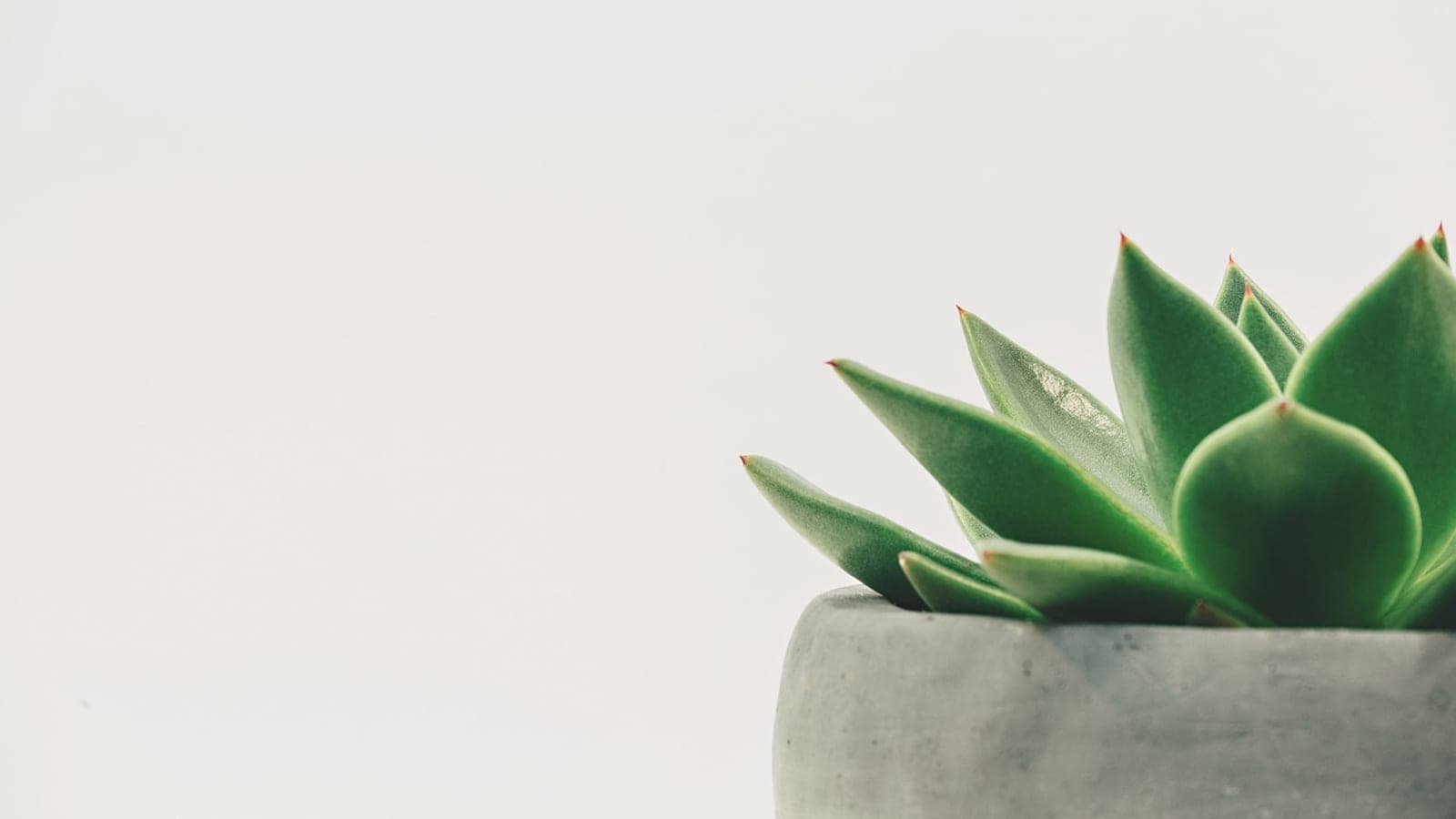
Photo by scottwebb on Pixabay
An overwatered succulent has translucent, soft leaves that drop at a touch. Here is how to confirm it, rescue the roots and stop it happening again.
The short answer
- An overwatered succulent has swollen, soft, translucent leaves that fall off at a touch, usually with damp compost that has not dried for days.
- Stop watering now and pull the plant out of its pot. Firm pale roots mean it is fine. Brown, black or mushy roots mean rot.
- Cut off all rotted roots and soft tissue, let the plant dry in the air, and replant in gritty, free-draining compost (potting mix) in a pot with drainage holes.
- Do not water the rescued plant for a week or more. A succulent with few roots needs very little.
- A leaf that falls off can mean thirst too. Squeeze it: plump and mushy is too much water, thin and wrinkled is too little.
What an overwatered succulent looks like
Succulents store water in their leaves, so a plant with too much of it looks fat, not sick. That is why the problem is easy to miss until it is advanced.
The signs, roughly in the order they show up:
- Leaves turn translucent or glassy, as if the water has swollen them from the inside.
- Leaves go soft and squashy, and may feel like a grape. A thirsty leaf feels firm.
- Leaves drop at the lightest touch, often without any shrivelling first.
- Yellow, then brown or black patches appear, usually starting low on the plant.
- The stem goes dark and mushy at the base. This is rot, and it moves upwards.
- The compost stays damp for days and may smell sour.
The RHS says overwatering "can damage roots and cause stunted growth, blistering (oedema) and rotting." Blistering is the raised, corky, watery bumps you sometimes see on the leaves, and it is a good clue that water is arriving faster than the plant uses it.
Overwatered or underwatered? Check before you act
Here is the catch. Clemson's extension service points out that the symptoms of over-watering and underwatering are similar. The correct treatment for each is the opposite of the other, so take a few minutes to find out which you have.
Feel the compost, deep down
Push a finger or a wooden skewer to the bottom of the pot. Damp and cool days after the last watering points to overwatering. Dry and dusty all the way through points to thirst.
Lift the pot
A waterlogged pot is heavy. A dry one is light. Once you know what your own pots weigh just after watering, this is the quickest test you have.
Squeeze one leaf
Plump, soft and glassy means too much water. Thin, wrinkled and firm means too little. The RHS notes that underwatering causes shrivelling and slow or misshapen growth.
Check the base of the stem
Press it gently. Firm is fine. Soft, dark or wet means rot has started, and you should move to the rescue steps below at once.
Look at the roots if you are still unsure
Slide the plant out of the pot. Healthy roots are firm and pale. Rotted ones are brown or black, soft, and fall apart when pinched.
How to save an overwatered succulent
Work through these in order. Speed matters, because rot moves from the roots up through the stem. For other plants, our guide to root rot treatment covers the same steps.
1. Stop watering and take it out of the pot. Tip the plant out gently and shake off the wet compost. If it came in a pot with no drainage holes, that is part of the cause and it will not go back in.
2. Cut away everything soft. Use clean scissors or a clean knife. Remove every brown, black or mushy root, and any leaves that are translucent or fall off in your hand. If the base of the stem is soft, cut upwards until the cut surface is firm and pale all the way across. Rot that is left behind keeps spreading.
3. Let it dry in the open air. Leave the plant somewhere bright, without direct sun and out of draughts, for a few days. The cuts should dry and form a dry skin. Planting a wet cut straight into compost invites rot to start again.
4. Repot in fresh, gritty compost. The RHS advises "very free-draining, gritty compost that will not get waterlogged". Use a pot with drainage holes, and go down a size if you have removed a lot of root. The same guide warns against a pot that is too large, because "the excess volume of soil can stay too wet and cause rot." Throw away the old compost rather than reusing it.
5. Wait before the first drink. Give the plant a week or more before you water, longer if it lost most of its roots. Then water sparingly at first and increase only when the plant is clearly growing again.
6. Treat the rot only if it keeps spreading. Physical fixes work for most plants: cutting back, drying, fresh compost. If you suspect a fungal problem that continues after that, ask a garden centre (nursery) for a product by type, check it is approved for houseplants where you live and follow the label.
If the whole plant is mush
When the stem is soft from the base to the top, the original plant is gone. Many succulents can still be restarted. Look for the healthiest leaf or rosette you can find, take it cleanly with a sharp blade, let the cut end dry for several days and lay it on dry, gritty compost in bright light without direct sun. Do not water until roots or a tiny new plant appear. It is slow, but it works with echeverias, jade plants and many others. Our guide to saving a dying houseplant covers what recovery looks like and when to cut your losses.
Why succulents are so easy to overwater
Three things combine against you:
- They do not look thirsty. Fat leaves make a succulent look well fed even when its roots are already dying.
- Ordinary houseplant compost holds too much water. Succulents want a gritty mix that dries quickly.
- Pots without drainage holes trap water at the bottom, where the roots sit in it.
Cool conditions make all three worse. The RHS says cacti and succulents need "a night temperature of only 8-10°C (46-50°F) and minimal or no watering" while they rest, and you do not need to match that exactly indoors to take the point: a plant that is not growing uses very little water. Watering in a cool room on the same schedule you used in summer is one of the most common ways to rot one. Our guide to cactus turning yellow covers the same problem for spiny types.
How to water a succulent so it does not happen again
The rule for the growing season is simple. The RHS says to water once "the surface of the compost feels dry to the touch", then let the excess drain away so the plant never stands in water. For a succulent that means the compost is dry through the pot, not only on top.
- Soak, then drain. Water thoroughly until it runs from the bottom, empty the saucer, and leave it alone.
- Wait for the compost to dry right through. Time between waterings is different for every pot, room and season.
- Water less when it is cool or dark. A resting plant barely drinks.
- Keep water out of the rosette. Water that sits in the centre of an echeveria or similar plant rots it from the middle. Bottom watering avoids that, as long as you drain the dish.
- Go for terracotta and drainage holes where you can. They dry quicker than glazed or plastic pots with no way out.
For a general method that works on any plant, see how often to water houseplants.
Rot fastest when overwatered
- Echeveria and other rosettes
- Water in the centre sits and rots the heart. Soft, translucent lower leaves come first.
- Lithops and other living stones
- Swell, split and rot quickly when watered out of season.
- Sedum and string-of-pearls types
- Fat leaves drop at a touch when waterlogged, and the stems go mushy at the base.
Forgive a little more
- Jade plant
- Thick stems hold plenty of reserve and recover well from a missed watering, but are still prone to rot if the pot stays wet.
- Haworthia
- Slow growers that tolerate dim light, though they still rot in wet compost.
- Aloe
- Large leaves store a lot of water, so it will cope with some dry spells.
Let Folly keep the schedule for you
The hard part with succulents is that the right interval changes with the season, the pot and the room, and the plant gives no hint until it is too late. That is where a fixed reminder fails.
Smart Care schedules on Folly Pro set each plant's watering interval from more than fifteen attributes, including the light in that room, the season and the weather where you live. A succulent on a bright sill in summer gets a very different interval from the same plant in a cool hallway in winter. Tap the plant and every factor is listed with the percentage it added or removed. Most apps hand you a number and ask you to trust it. Folly shows its working.
If you are not sure what is wrong with a plant, photograph it and Plant Doctor matches it against 500+ diseases and pests and gives you the likely cause, how to prevent it and what to do first, free on every plan. When it finds a problem Folly can treat, a recovery plan on Folly Pro takes the plant through the fix day by day, and its normal watering reminders pause while the plan runs.
Questions people ask
Why are the leaves falling off my succulent?
Leaves that drop at the slightest touch, and feel swollen, soft or see-through, mean too much water. Leaves that are thin, wrinkled and crisp at the edges before they fall mean too little. Squeeze one leaf gently: plump and mushy is overwatered, flat and papery is thirsty. Old leaves at the very bottom of the plant dropping slowly, one at a time, is normal ageing.
How can I tell an underwatered succulent from an overwatered one?
Look at the compost and the leaf. Underwatered plants sit in dry, light compost, and the leaves go thin, wrinkled and firm. Overwatered plants sit in damp, heavy compost, and the leaves go swollen, soft and often yellow or translucent. The danger is that both can make a leaf fall off, so check the pot before you reach for the watering can.
Is bottom watering good for succulents?
It can be, because it wets the compost evenly and keeps water off the rosette, where it can sit and rot the centre. The risk is the same as with any method: if the pot stands in water for too long, or you do it before the compost has dried, the roots stay wet. Drain the dish after a short soak and wait for the compost to dry before you do it again.
Can an overwatered succulent recover?
Yes, if some firm tissue and some healthy roots remain. Stop watering, take the plant out of the pot, cut away any soft or black roots and mushy tissue, let it dry in the air, then replant in fresh, gritty, free-draining compost. If the whole stem is soft, take a healthy leaf or cutting from the top and root that instead.
How often should I water a succulent?
There is no fixed number of days. Water thoroughly only when the compost has dried out right through, which can be a week in a warm bright room and several weeks in a cool one. Plants rest when it is cool and the light is low, and need far less. Checking the compost beats following a calendar.