Why Are My Lemon Tree Leaves Turning Yellow?
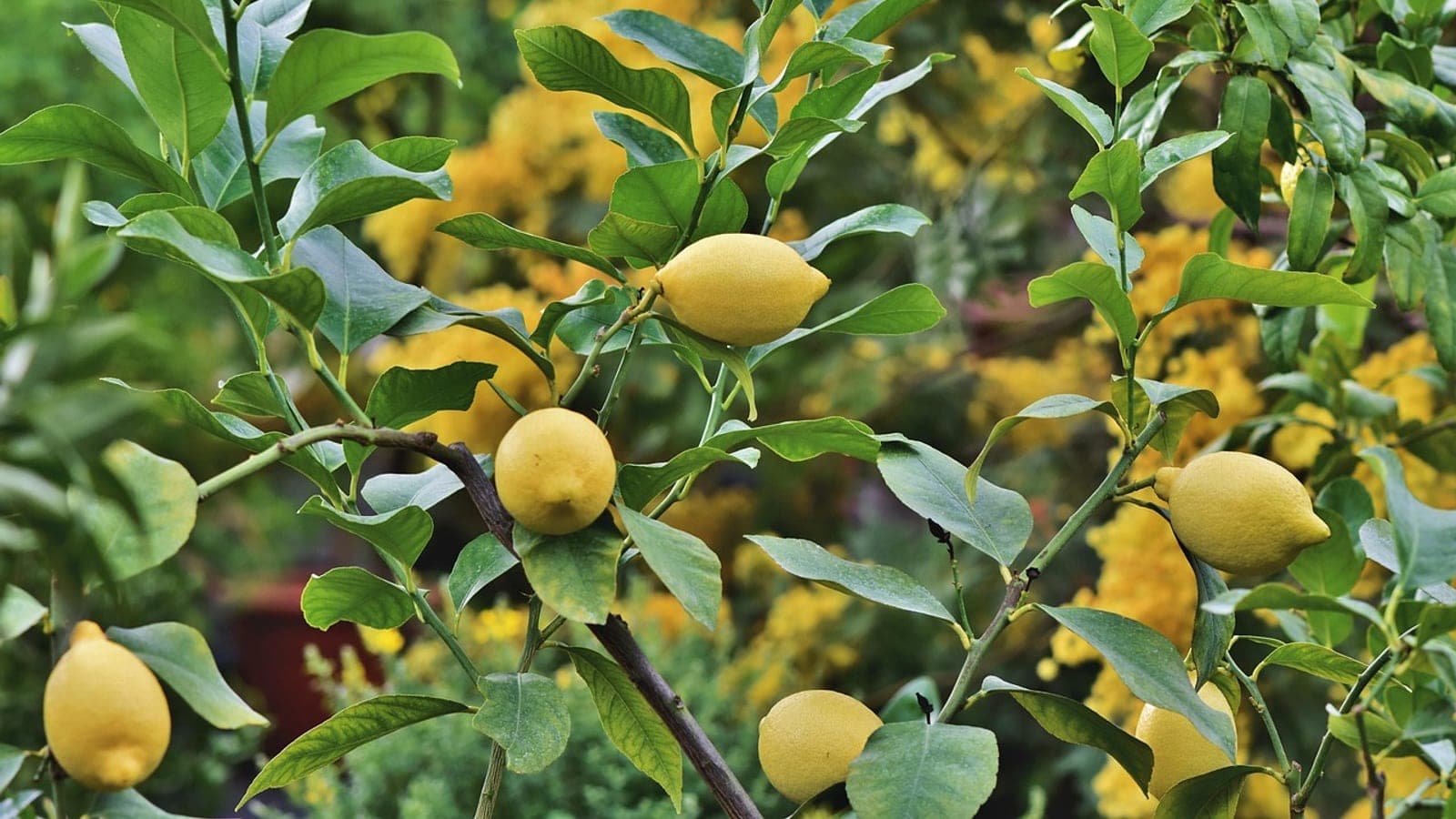
Photo by Ralphs_Fotos on Pixabay
Yellow lemon tree leaves are usually a watering, feeding or cold problem. Here is how to tell which from the pattern on the leaf, and what to do first.
The short answer
- Check the compost first. Yellow leaves on a lemon tree most often mean the roots are too wet or too dry, and the two look alike.
- Feel the pot. Heavy and wet means ease off the water. Light and dry all the way down means water properly.
- Pale older leaves, or yellow between green veins, point to feeding. Lemons are hungry plants and need a citrus feed in their growing season.
- Draughts, a cold windowsill and a move to a new spot also turn leaves yellow and make them drop.
- Look under the leaves for scale insects and red spider mite before you blame anything else.
Start with the roots, not the leaves
A lemon tree cannot tell you which problem it has through the colour alone, because several causes produce the same yellow. The RHS says of yellowing citrus leaves: "The roots could be too wet or too dry." That is the real first question, and the answer is in the pot.
Lift it. A lemon tree that has just been watered is heavy, and one that is thirsty feels surprisingly light. Push a finger a few centimetres (an inch or two) into the compost (potting mix). If it is cool and soggy days after the last watering, the roots are short of air. If it is dry and pulling away from the pot wall, the roots have been starved of water for too long.
Both give you leaves that fade to a pale, even yellow, and then fall. Our guide to how often to water houseplants covers the pot checks in more depth, and they apply to a potted lemon exactly as they do to anything else.
Pattern on the leaf tells you the cause
Once you have checked the pot, look at where the yellow sits. The pattern narrows it down quickly.
Whole leaf pale, oldest leaves first
The tree is moving nutrients out of old leaves to feed new growth. This is the classic sign of hunger, and nitrogen is the usual shortage. Feed it.
Yellow between the veins, veins still green
A shortage of a trace nutrient such as iron or magnesium, often because the roots cannot take it up from wet or very alkaline compost. A citrus feed that includes trace elements helps, once the watering is right.
Whole leaf yellow, then dropping, across the tree
Stress at the roots or a sudden change of temperature. Think about watering, a draught, or a recent move before you reach for fertiliser.
Fine speckles, stickiness or tiny bumps
Pests. Look under the leaves and along the stems with a magnifying glass. Red spider mite speckles, scale insects leave bumps and sticky residue.
None of these is certain on its own, and two can overlap. A tree sitting in wet compost often goes yellow between the veins because the waterlogged roots cannot take up nutrients, so it looks like a feeding problem and is really a watering one.
Overwatering and underwatering
Potted lemons are rarely killed by a single missed watering. They are killed by a pot that stays wet for weeks, especially in winter when the tree is hardly growing and uses very little. The RHS warns against this directly: "Ensure that care is taken not to over water in winter." (That is the cooler, darker half of the year, roughly November to March in the northern hemisphere and May to September in Australia, New Zealand and South Africa.)
If the compost is wet, stop watering and let it dry to a few centimetres down before the next one. Make sure the pot has drainage holes and that the tree is not standing in a saucer of water. A tree that has been waterlogged for a long time may need its roots checking: slide it out, and cut away any that are brown, soft and slimy. Firm pale roots are healthy.
If the compost is bone dry, do not splash the top. Water slowly until it runs out of the bottom, or stand the pot in a bowl of tepid water until the compost has soaked it up, then drain it. Water then goes into the root ball instead of down the gap at the edge.
Aim for even moisture. A lemon tree that swings between soaked and dry sheds leaves at both ends of the cycle.
Hunger: lemons are heavy feeders
Citrus grow and fruit all at once and use up the nutrients in a pot far faster than most houseplants. The RHS notes that "Draughts, low temperatures, or lack of feeding will also result in yellowing leaves", and its advice is direct: "Feed citrus with a proprietary citrus fertiliser."
A citrus feed (fertiliser, or fertilizer in the US) contains the nitrogen and trace elements these trees need, in balance. Follow the label on the pack for how much and how often, and feed while the tree is growing actively, not through its winter rest. Do not feed a tree that is sitting in wet compost or one that has dry, stressed roots, because it will not take the feed up and you can scorch the roots.
Feeding fixes hunger slowly. Expect new leaves to come through green over a few weeks, not the old ones to recover. If you feed a tree that was never short of food and the leaves are still yellow, go back to the roots.
Cold, draughts and a change of scene
Lemons are not hardy in colder climates, but they do not want to be hot and dry either. The RHS says "Citrus prefer a cool winter rest", which means a bright, cool room rather than one next to a radiator. Warm, dry air over the leaves and cold roots together is a common cause of sudden yellowing indoors.
Leaves yellow and drop when:
- A cold window or a door draught blows on the tree through the night.
- It is moved from a bright outdoor spot to a dim room, or the other way round. Bring it in or put it out gradually, over a week or two.
- It sits close to a radiator or heater, so the air is dry and the compost dries out unevenly. See our guide on plants near radiators.
Light matters too. Lemons want the brightest spot you have, with as much direct sun as the window gives. In the northern hemisphere that is a south-facing window; in the southern hemisphere, a north-facing one. A tree in a dim corner makes pale, weak leaves and drops the older ones to save energy.
Moving it often is a stress in its own right. Pick a spot, fix any draught there, and leave it.
Pests: look under the leaf
The RHS lists the usual suspects: "Citrus can also come under attack from pests such as scale insects, mealybug and red spider mite." All three feed on sap, and a leaf that loses sap goes pale and speckled or yellow, and may curl.
Turn the leaves over and check along the midrib and where the leaf meets the stem. Scale insects are small, flat, brown bumps that do not move, usually with sticky residue below. Red spider mite leaves a fine pale stipple, and webbing when it is bad. Mealybug looks like tiny tufts of cotton wool.
Wipe small infestations off with a damp cloth, isolate the tree, and check it again every few days. For anything heavier, a product made for houseplants may help: check it is approved for houseplants where you live and follow the label. Our guides to scale insects and spider mites cover what to look for and how to clear them.
Repotting: only when the roots ask for it
Repotting a lemon tree because its leaves are yellow rarely helps, and can make matters worse by disturbing the roots when the tree is already struggling. Only repot if the roots really are crowded. The RHS says: "Do not pot on citrus into a container much larger than the root ball." An oversized pot stays wet around the roots, which brings you straight back to the first problem. If a tree does droop afterwards, our guide to a plant drooping after repotting explains what is normal.
What to do, in order
- Check the compost. Fix the watering before anything else.
- Check for a draught, a cold glass pane or a nearby heater.
- Look under the leaves for pests.
- Give it a citrus feed if it is growing and the compost is in good order.
- Wait. New leaves come through green over weeks, not days.
Pull off any leaf that is wholly yellow. If you are still unsure what is wrong, the wider causes are set out in our guide to why houseplant leaves turn yellow.
Let Plant Doctor name the problem
Yellow leaves have a dozen causes, and the pattern is sometimes hard to read by eye. Photograph the leaf in Folly and Plant Doctor matches it against 500+ diseases and pests. You get the likely cause, what it looks like, what causes it, how to prevent it and what to do first, free on every plan.
If it finds a problem Folly can treat, "Fix my plant" on Folly Pro asks a few quick questions about your tree and builds a day-by-day recovery plan, with check-in reminders and a plan that changes if the tree gets worse. Folly also identifies your plant from a single photo across 30,000+ species, so you can be sure which citrus you are caring for.
Questions people ask
Why are my lemon tree leaves turning yellow and falling off?
Usually the roots are unhappy. Waterlogged compost, compost that has been left to dry out hard, a cold draught and a sudden move all make a lemon tree shed leaves. Yellowing followed by dropping, especially after a change of position or season, points to stress at the roots or a sharp change in temperature. Check the compost first, then the position.
Why are my lemon tree leaves curling and yellow?
Curling with yellowing most often means the roots are either too wet or too dry, so the leaf cannot hold its water. Sap-sucking pests such as scale insects and red spider mite also cause curled, pale, sticky or speckled leaves. Turn a leaf over and look at the underside and the stems before you change anything about the watering.
What do yellow spots on lemon leaves mean?
Small yellow spots or speckling often mean pests feeding on the leaf, most commonly red spider mite, which leaves a fine pale stipple and sometimes webbing on the underside. A leaf that is yellow between green veins points to a shortage of nutrients instead. Look closely with a magnifying glass to tell them apart.
Should I pick off the yellow leaves from my lemon tree?
Once a leaf is fully yellow it will not turn green again, so you can remove it, which also lets you check the stem for pests. Leave leaves that are only partly yellow, because the tree is still drawing nutrients from them. Fix the cause first, otherwise new leaves will yellow in the same way.
Can a lemon tree recover once the leaves have yellowed?
Yes, if the cause is found and fixed. New growth coming through green is the sign you have it right. Existing yellow leaves will not recover, but a tree that keeps producing healthy new leaves is on the mend.