Why Are Leaves Falling Off My Rubber Plant?
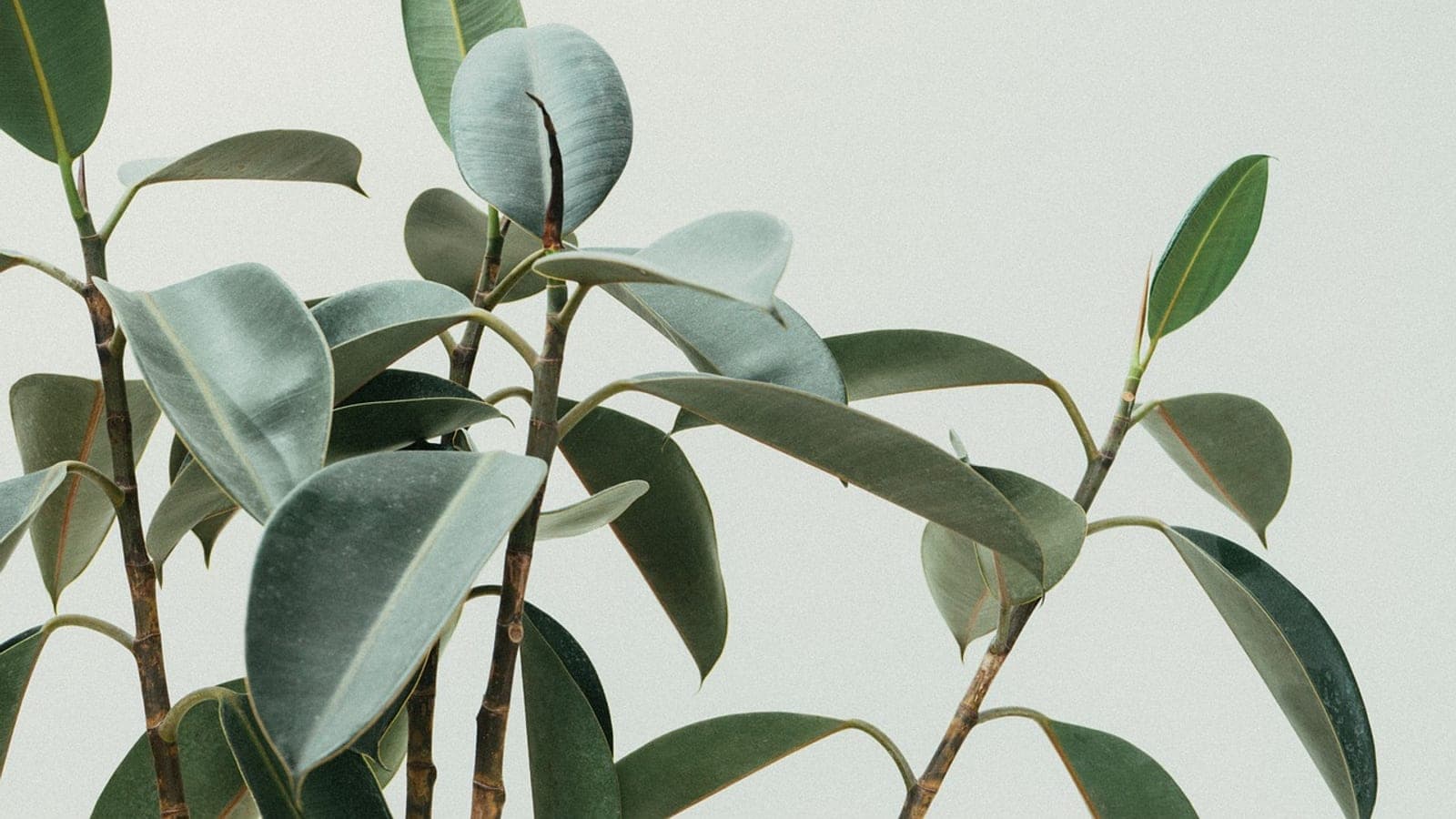
Photo by StockSnap on Pixabay
A rubber plant drops leaves when its roots, light or temperature change. Here is how to tell wet from dry, cold from dim, and what to do for each.
The short answer
- A rubber plant drops leaves when something changes. In order of likelihood: too much water, too little light, a cold draught, or dry air.
- Push a finger a few centimetres (an inch or two) into the compost (potting mix). Wet days after watering means overwatering, which is the most common cause. Dry and pulling away from the pot means it has been left too long.
- Move it to the brightest spot you have, away from cold glass, doors and radiators, and keep it there.
- One or two lower leaves going now and then is normal ageing. Several in a week is a signal.
- Once you have fixed the cause, stop fussing. Steady conditions bring new growth.
Why a rubber plant sheds leaves
The rubber plant (Ficus elastica, also sold as a rubber tree or rubber fig) is a tough houseplant that holds its glossy leaves for years. That is why a sudden pile of them on the floor is alarming. It is also useful, because the plant is telling you plainly that something in its surroundings changed.
The usual suspects are few. The RHS says sudden leaf drop on ornamental figs is usually due to overwatering. Clemson's extension service names too little light, dry air and cold draughts for rubber plants in particular. So the job is to work out which of these fits your plant, and the quickest way is to start with the pot.
Step one: check the compost
Most rubber plant leaf drop starts at the roots, so look there before anything else. Our guide to how often to water houseplants covers the checks in more depth.
Lift the pot
A pot that has just dried out is light. A waterlogged one is heavy, even days after watering. Learn the weight of your plant just after a drink and this becomes your fastest test.
Push a finger into the compost
Go in a few centimetres (an inch or two), past the surface. Cool and wet at that depth, several days after the last watering, points to overwatering. Dry all the way down and shrinking from the edge of the pot means it has gone too long between drinks.
Check the drainage
Make sure the pot has holes in the bottom and that the plant is not standing in a saucer or decorative outer pot full of water. Tip away anything that collects.
Look at the leaves that fell
Yellow, limp leaves that fall easily usually mean wet roots. Brown, crisp edges and leaves that dry out before dropping point to dryness, dry air or a heat source.
Smell the compost
A sour or stagnant smell means roots that have started to rot. Healthy compost smells of very little.
If it is overwatered
This is the most common cause, and the one most often made worse by good intentions. A rubber plant in cool, dim winter conditions uses very little water, so a routine that worked in summer soaks the roots in winter. Soggy compost drives out the air, roots suffocate, and the plant sheds leaves it can no longer feed. The leaves often yellow first, and the lower ones go first.
What to do:
Stop watering until the top few centimetres have dried and the pot feels light. Tip out any water in the saucer or outer pot. Move the plant somewhere bright so it uses water faster. If the compost stays wet or smells sour, slide the plant out and look at the roots. Healthy roots are firm and pale. Rotting ones are brown or black, soft, and the outer layer slips off.
If you find rot, cut the soft roots away with clean scissors, repot into fresh, free-draining houseplant compost in a pot with drainage holes, and water once, lightly. Our guide to root rot goes through the steps, and how to save a dying houseplant shows what recovery looks like over the following weeks.
The RHS warns that regular overwatering can lead to oedema, a sign the plant is badly waterlogged.
If it is too dry
The opposite problem looks different. Dry compost that has shrunk away from the pot lets water run straight through and out of the drainage holes, so a quick splash from the top does nothing. Leaves curl, go dull and crisp, and the older ones drop.
Clemson advises that you water rubber plants thoroughly but let the soil dry slightly between waterings. Stand the pot in a sink with a little tepid water until the compost swells and soaks up evenly, then drain it fully. That is a better reset than repeated sips from the top.
If the light is too low
Rubber plants cope with dim rooms better than most, but not forever. Clemson notes they prefer bright light but are adaptable to low light, which is exactly why they end up in corners. Over a few weeks of dim light the plant stretches, new leaves come in small and pale, and it quietly drops the lower ones it can no longer afford.
Light falls as the days shorten, so this bites hardest in autumn and winter, whichever hemisphere you are in. Move the plant to the brightest spot you have, close to a window but out of hot midday sun, and turn it a quarter every week or two so all sides get light. A window that gets the most sun is south-facing in the northern hemisphere and north-facing in the southern.
If it is cold or in a draught
Rubber plants are tropical, and they dislike cold. Clemson's rubber plant factsheet lists cold draughts among the causes of leaf loss, and the RHS recommends a warm, even temperature, without large fluctuations and away from draughts.
In practice that means checking three places. A plant right against a window pane on a cold night sits in colder air than the rest of the room. A plant beside a door that opens onto the outside takes a blast of cold air every time it opens. And a plant above a radiator gets the opposite problem, hot dry air that scorches the leaf edges. Our guide to plants near radiators explains how far back to keep it, and houseplant care in a UK winter covers the rest of the heating-season routine.
If it is dry air or pests
Clemson lists dry air alongside too little light and cold draughts as a cause of leaf loss. Central heating can pull the humidity in a room very low, which dries out leaf edges and tips. A bowl of water nearby does little. Moving the plant away from the heat source and wiping the leaves occasionally does more.
Pests are the cause people look for first and find last. Clemson notes that mealybugs may infest rubber plants, and spider mites and scale are the other usual suspects on indoor plants. Check the undersides of the leaves and the joints where leaf meets stem. Cottony white clusters are mealybugs, tiny moving specks and fine webbing are spider mites, and brown bumps that do not rub off easily are scale. Our guides to spider mites and scale insects set out what to do. If you reach for a product, choose one by type, check it is approved for houseplants where you live and follow the label.
When leaf drop is normal
Every plant sheds its oldest leaves eventually. If you lose one or two from the bottom of the stem, the top is growing well, and the leaves are yellowing slowly rather than all at once, leave it alone. The same goes for a few leaves after you bring home a new plant or move it to a different room. That is adjustment, not disease.
The sign that it is more than that is speed and number. Several leaves in a week, or leaves dropping from the top as well as the bottom, means something is wrong. If you are comparing with another popular ficus, our guide to fiddle leaf fig leaf drop covers a very similar set of causes.
How to help it recover
Once you have fixed the cause, leave the plant alone. Do not move it again, repot it or feed it, because each is another change. Remove only leaves that are fully yellow or brown, and wipe the dust off the rest so they catch more light.
Let Folly do the checking
The difficulty with a shedding rubber plant is that wet, dry, dim and cold can all drop the same leaves, so guessing is easy and guessing wrong is costly. That is the gap Folly closes.
Photograph the plant and Plant Doctor matches what it sees against 500+ diseases and pests, and gives you the likely cause, what it looks like, how to prevent it and what to do first. That is free on every plan. If it finds a problem Folly can treat, a recovery plan on Folly Pro builds a day-by-day schedule for that plant, with check-ins on set days and reminders.
For the watering swings that cause most leaf drop in the first place, Smart Care schedules on Folly Pro set each plant's watering interval from more than 15 attributes, including the light in its room, the season and your local weather. Tap the plant and every factor is shown with the percentage it added or removed. Most apps hand you a number and ask you to trust it. Folly shows its working.
Questions people ask
Why are the bottom leaves falling off my rubber plant?
One or two lower leaves yellowing and dropping while the top keeps producing new growth is the plant shedding its oldest foliage, and it needs no action. If several drop within a week, or the compost stays wet for days, look at watering first. If the leaves go dry and crisp instead, the plant is being left too dry between drinks.
Is my rubber plant dying if it has lost most of its leaves?
Not necessarily. A rubber plant with firm, green stems and a trunk that does not bend or feel mushy is alive and can regrow. Fix the cause, keep the light bright and steady, and be patient. New leaves usually appear from the top once the plant is in active growth.
Why is my rubber plant dropping leaves after I moved it?
A move changes light, temperature and airflow all at once, and rubber plants answer by dropping a few leaves while they adjust. Keep the new spot steady, do not repot or feed at the same time, and give it a few weeks. Losing a handful of leaves after a move is common. Losing many means the new spot is too dim, too cold or too draughty.
Will the leaves grow back on my rubber plant?
Leaves do not regrow where they fell, but a healthy plant puts out new leaves from the growing tip and sometimes from buds along the stem. A plant that has dropped most of its leaves can be cut back to a few healthy nodes to encourage branching once it is growing strongly again.
Should I cut off yellow leaves from my rubber plant?
Remove leaves that are fully yellow or brown, or that come away at a touch. Leave any that are still partly green, because the plant is still using them. Never strip a stressed plant, as it needs every working leaf to recover.